
































 Login/register to save Article for later
One outdoor unit serves one indoor unit. This is best suited to a single problem room, such as an overheating bedroom or extension, where targeted cooling is the priority.

Estimate your project costs instantly with Build It's interactive self-build cost calculator
Calculate NowGet an accurate, detailed cost breakdown of your project
Submit plans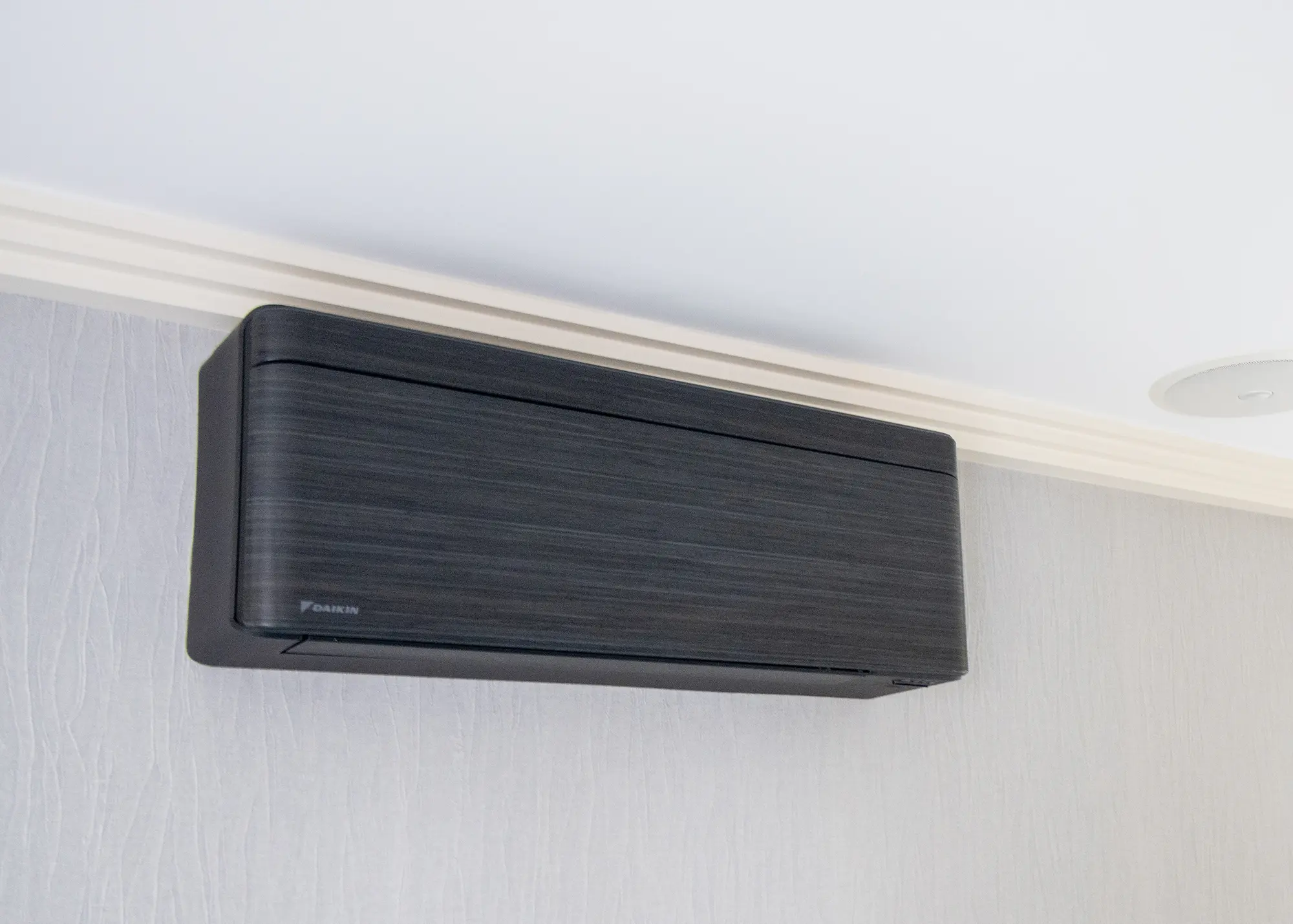

For many UK homeowners, air conditioning still means a wall-mounted unit blowing cold air across a hotel bedroom or office. But air-based systems do much more than cool a single room: depending on the design, they can heat, cool and circulate air around the home, with filtration, humidity management and fresh-air ventilation potentially integrated into the wider system. So, should this tech form part of your comfort strategy?
Heat waves have become a prominent part of the summer conversation – reinforced by our exceptional run of hot weather this year – and more homeowners are considering whether they need active cooling. Many homes, whether recently built or much older, were not designed to cope with overheating or prolonged periods of high temperatures. The effects are often felt most acutely in bedrooms, where noise and security concerns – not to mention hot nights themselves – can make opening windows impractical.
New-build homes in England are subject to Part O of the Building Regulations, introduced in 2022 to limit unwanted solar gains and ensure excess heat can be removed. They also provide a blank canvas for incorporating features such as external shading and well-positioned opening windows or rooflights. Yet, passive measures may not always work as intended. Meanwhile, existing homes typically offer less opportunity to introduce them effectively.
The upshot? “People now are starting to say, ‘I need cooling’,” says Richard Soper, UK managing director at The Unico System. It’s a need recognised in the US decades ago, with active cooling now the norm across much of the country. Richard sees a parallel with air conditioning in cars. “I’ll put the aircon on at the start of a journey and feel the same at the end as I did when I got into the car,” he says. “You can have that same effect in your home – and you won’t even think about it; it becomes second nature.”
For UK homeowners considering it, the choice is whether to address individual problem rooms or manage comfort more consistently throughout the building. Either way, for effective cooling, you’ll want to look beyond the low-cost portable air coolers heavily promoted online.
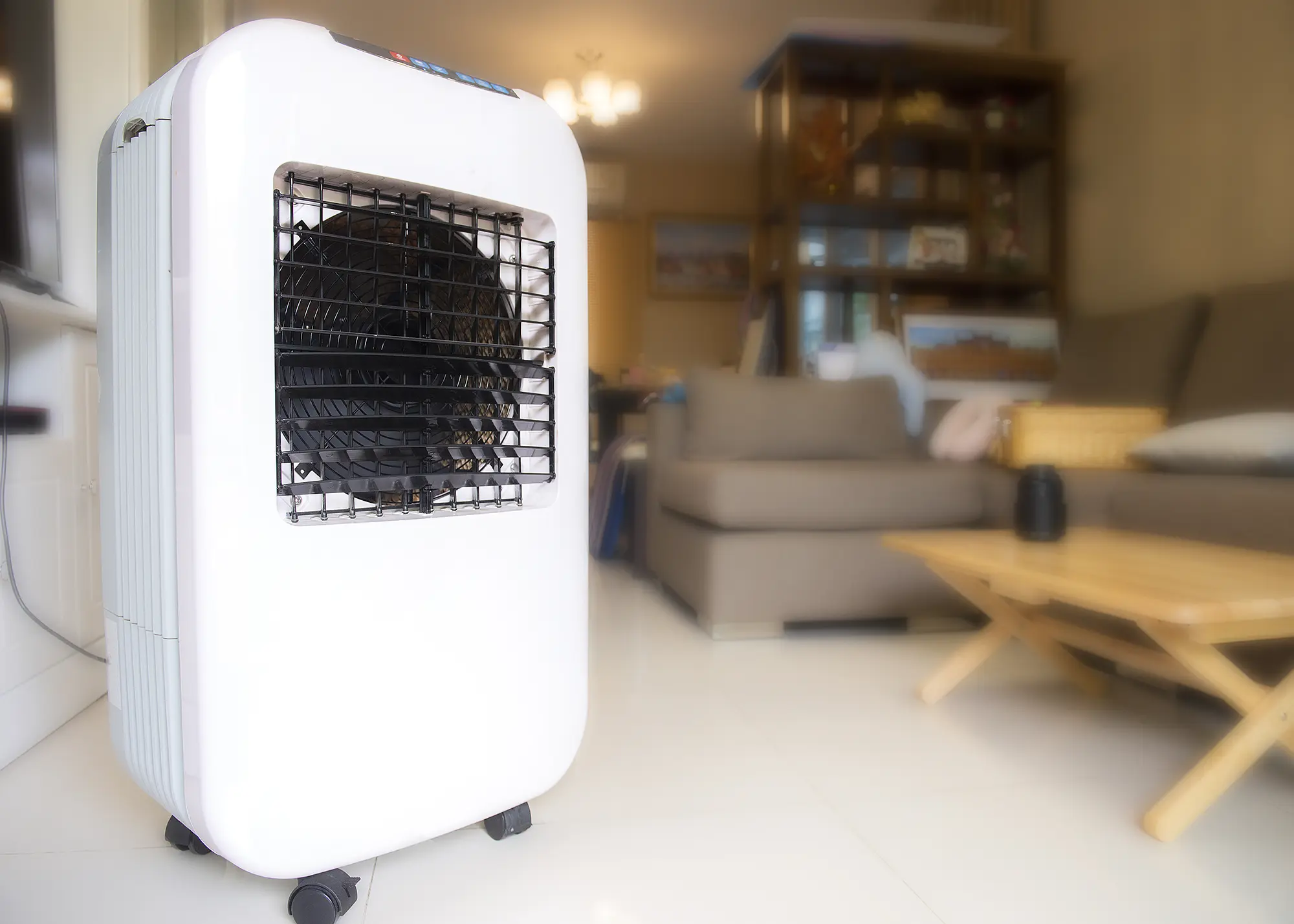
Portable evaporative coolers sell like hotcakes over the summer and can provide some local relief. But they add moisture to the air and become less effective as humidity rises; so don’t expect them to perform the role of built-in active cooling systems. Photo: ISTOCK UNDEFINEDUNDEFINED
Many fixed air-conditioning systems are actually a type of air-to-air heat pump. In cooling mode, they take heat from inside the building and release it outdoors; reversible models can run the process in the opposite direction to provide heating. Like the more familiar air-to-water heat pump, they use a refrigerant circuit to move heat. The difference is how that energy is delivered: air-to-water systems transfer it into water for radiators, underfloor heating and a hot water cylinder, while air-to-air systems deliver heating or cooling through the air.
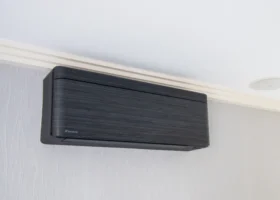
The simplest form is the familiar hotel-room setup: an outdoor pump serving a wall-mounted or concealed fan unit inside the room. Multi-split arrangements connect several indoor units to a single outdoor appliance. They can suit homes where only selected rooms need heating and cooling, but each indoor unit still serves a defined room or zone rather than distributing air throughout the house.


More integrated is a central, ducted arrangement. Typically, an outdoor heat pump connects to a concealed indoor air-handling unit, which conditions recirculated air before distributing it through ducts to several rooms or a defined zone. A whole-home design may use one or several indoor units, depending on the layout and heating and cooling loads. Bringing fresh outdoor air into the home remains a separate function, although an MVHR system can be designed alongside it as part of the wider setup.
Whichever arrangement you choose, using air rather than water as the delivery medium does not change the home’s underlying requirements – established through room-by-room heat loss and cooling load calculations. “A home’s heat loss is the same no matter how you maintain comfort levels,” says Build It expert David Hilton. “The air or water are simply the medium used to keep rooms warm.”

UK managing director at The Unico System

Heating & renewables expert
A central system can become the principal source of space heating and active cooling, potentially removing the need for radiators or UFH. For projects where summer comfort is a core requirement, its main advantage is that both functions can be delivered through one concealed distribution network, with controls managed centrally.
With the right controls, this extends zoning to cooling as well as heating, allowing comfort levels to be tailored more precisely across the home. “Because an air-based system conditions the air directly, it also responds quickly when you want to change the temperature in a room,” says David.
While that might sound like something we’d all love in our homes, some people still hesitate. Richard likens it to the advent of the combi boiler. Homeowners accustomed to a large cylinder initially found it hard to believe a compact wall-mounted appliance could meet both space heating and hot water demand. Whole-house, air-based climate control can require a similar shift in thinking.
In practice, the system will be tailored to your home and the way you want to use it. A specialist will plan how conditioned air reaches each space, ensuring the ductwork, outlets and controls work together to provide quiet, even comfort. Involving them early helps integrate the system discreetly into the building design.


A high-quality air-based system should do more than simply reach a given temperature: a good install should maintain comfort without obvious draughts, intrusive noise or significant hot and cold spots. Wall-mounted split units deliver conditioned air from one point in the room, whereas a well-designed central system can distribute it through several room outlets for gentler, more even coverage.
Cooling also removes some moisture from the air, making hot conditions feel less clammy, while closer humidity control can be added through sensors and other equipment. With the right filter specification, a central system can help remove airborne dust, pollen and pet dander – improving air quality for everyone, and offering particular value to households affected by allergies.
For a more complete approach, air-based heating and cooling can be designed alongside MVHR. In this situation, the primary climate-control system regulates temperature, while MVHR removes stale air, recovers heat from it in winter and supplies filtered outdoor air as part of the home’s ventilation strategy.
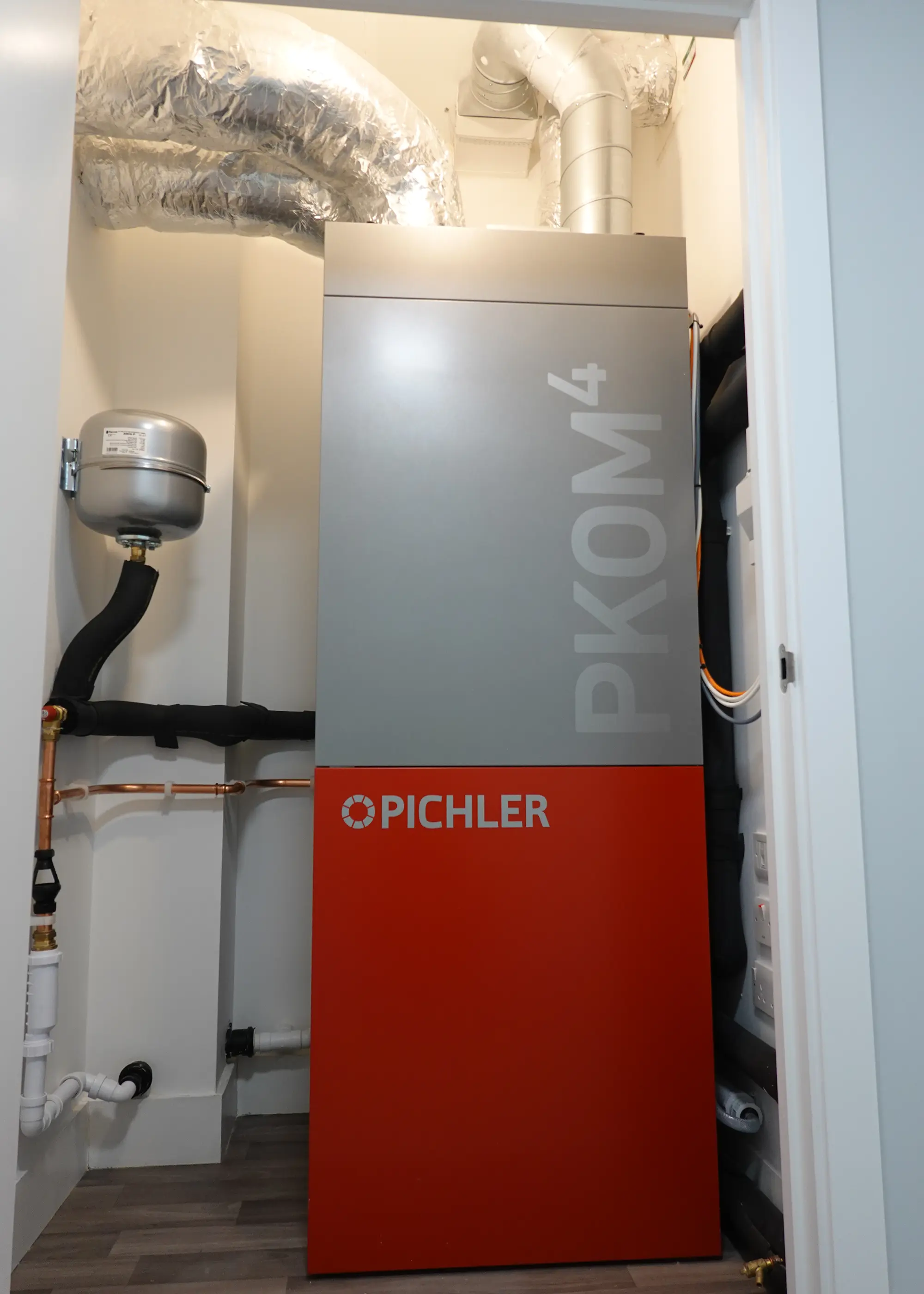
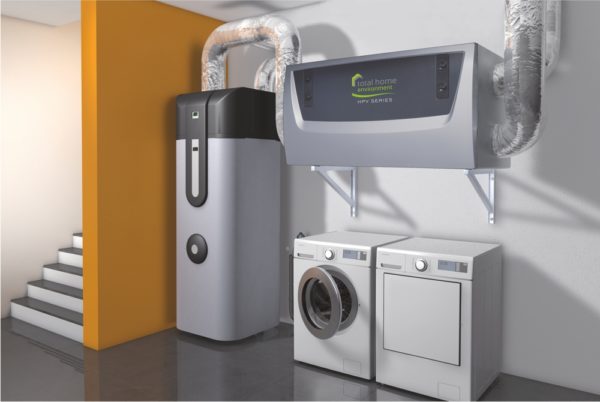
Total Home Environment’s PKOM 4A Compact Service Unit combines MVHR with one heat pump for space heating and cooling, and a second dedicated to a 212L hot water cylinder – making the system an appealing option for well-insulated, airtight small homes and flats
Case study Grade II listed coach house upgraded with a HVAC system
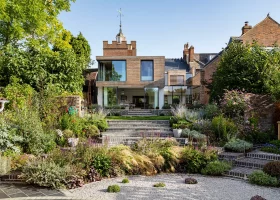
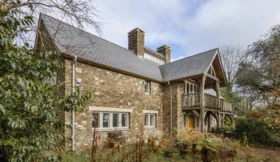
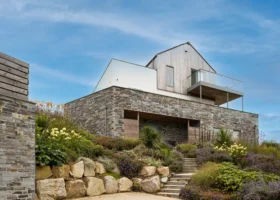
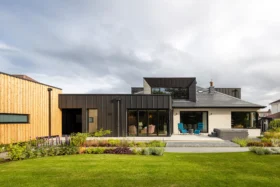
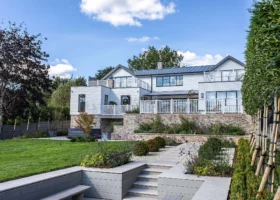
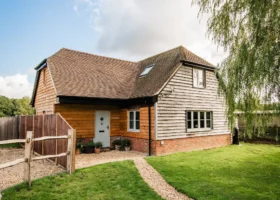
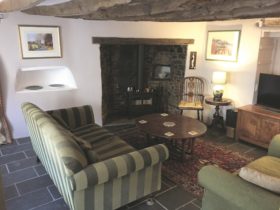
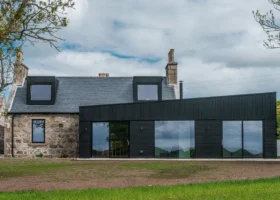
Set within the grounds of a listed Georgian property, The Coach House has undergone a deep retrofit to restore its character, provide modern living and entertaining spaces, and dramatically improve energy performance. Owner Dave Smith, who lives in the main house, wanted to create the perfect place to accommodate overnight guests – and the results are truly spectacular.
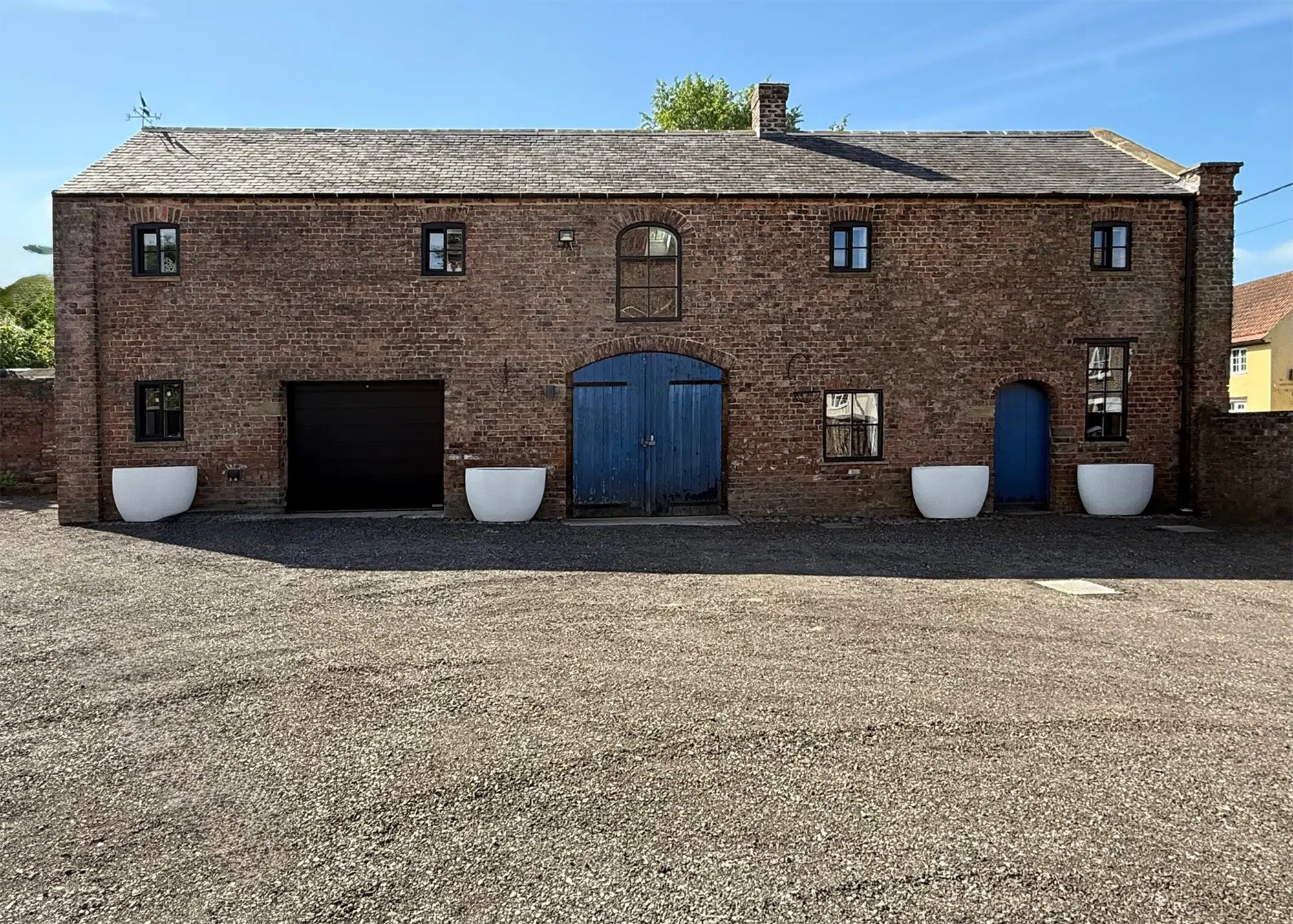
Photo: The Unico System
Having previously experienced overnight summer temperatures of up to 40°C in The Coach House’s bedroom, Dave knew he wanted to address both heating and cooling performance in his renovation. The project therefore combines advanced insulation in the walls, roof and floors with carefully chosen renewable technologies and – at its heart – the versatile Unico HVAC (heating, ventilation and cooling) system, delivering a beautiful home that’s comfortable all year round.
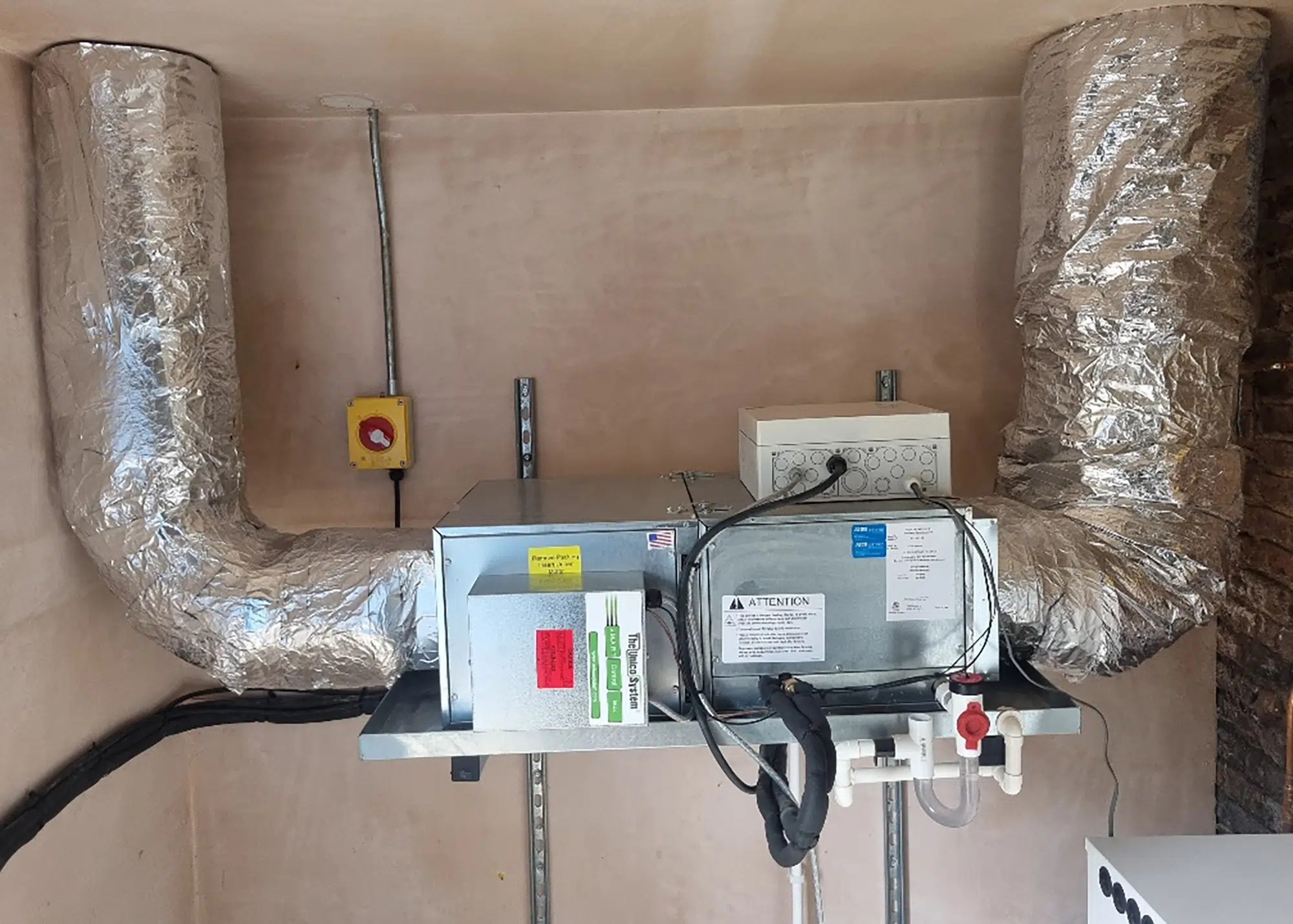
Photo: The Unico System
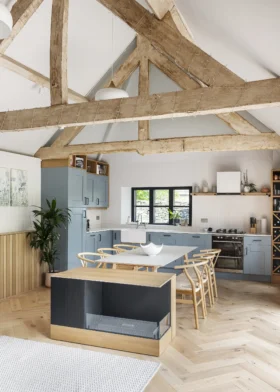
The Unico System’s 1218 air handling unit was selected for its efficiency, quiet operation and ease of installation. From the main unit, the system splits into small-bore ductwork, which is seamlessly integrated with the building’s design. In the rooms, discreet round outlets were chosen that align with the downlights – minimising impact on the heritage aesthetic.
| Location | North Yorkshire |
| Property type | Listed coach house |
| System installed | Unico 1218 air handling unit with Daikin split air conditioning system |
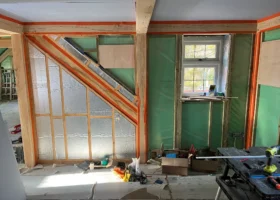
A whole-house system is easiest to accommodate in a new build project or substantial renovation or retrofit, as this means plant space, ducts, outlets and returns can be considered alongside the architecture. Depending on the chosen heat source, domestic hot water may either be incorporated into the wider setup or provided separately.
If you have an existing home where certain spaces regularly overheat, a more targeted installation might suit. With the indoor equipment and ductwork accommodated in an accessible loft, the air-based system could cool – and, if desired, heat – those priority rooms while the existing boiler continues to serve the rest of the property and provide domestic hot water. This route can work in a bungalow as well as on the upper floors of a two-storey home. A clear control strategy will be needed so the two arrangements work together as intended.
One outdoor unit serves one indoor unit. This is best suited to a single problem room, such as an overheating bedroom or extension, where targeted cooling is the priority.
A single outdoor unit connects to several indoor units, allowing heating and cooling in multiple rooms. It avoids the need for a central duct network, but each conditioned room still needs its own wall-mounted, ceiling-mounted or concealed fan unit.
One or more air handlers condition recirculated air and distribute it through ducts and outlets. This is better suited to whole-house comfort or a larger area, such as an entire upper floor, but needs planned supply routes, return-air paths, zoning and maintenance access.
Air-based heating and cooling may also be designed alongside MVHR, enhanced filtration, smart humidity controls and a coordinated control strategy. The system designer must establish exactly what is integrated and how the different controls will work together.
Most domestic air-based climate control systems operate pretty quietly – as long as the ductwork has been properly sized and installed. Noise levels can depend, however, on the type of system, the fan speed and the location of the main unit. Central ducted air-based systems can be discreet, with the details hidden and conditioned air delivered via small outlets. You should think about the location of bedrooms and other quiet spaces when specifying a system.
Air-based systems work very well in large spaces, as long as the system is properly designed with the size and layout of the room in mind. Very big open-plan schemes may require quite a few outlets to ensure an evenly cooled or heated space – just note that different features such as staircases and kitchens can impact their location.
If you’re self building, the positioning of the system’s outlets should be considered as part of the overall architectural and interior design, rather than decided once the scheme is complete. The aim is to evenly distribute air throughout the house without any draughts or cold/hot spots.
Yes. Just like any heating or cooling system, an air-based climate control system needs regular maintenance to ensure it operates as expected and required. Any filters in the system will need to be cleaned, and if the set-up involves an MVHR system, that will require filter changes.
Air-based heating and cooling systems can be very energy efficient – especially when they use an air-to-air heat pump. An air-to-air heat pump system moves heat from around the outdoor unit, just like a standard ASHP (air-to-water), but then transfers into the air supply going into the home. Delivery is via air handling units inside the building, which feature a condenser and fan to distribute the warmth. An air-to-air heat pump is enabled to deliver space heating in winter, as well as cooling in summer.