












 Login/register to save Article for later
Molly Askham is development manager at Millworks, a leading supplier of high-performance timber cladding, offering expert guidance, advanced finishes and sustainably sourced solutions for self builders, architects and contractors across the UK.
- Plan ItBack
- Design ItBack
- Build ItBack
- Homes
- ProductsBack
- CostsBack
- Self Build Cost Calculator
Estimate your project costs instantly with Build It's interactive self-build cost calculator
Calculate Now - Costs & Finance
- Contracts & Warranties
- Build It Estimating Service
Get an accurate, detailed cost breakdown of your project
Submit plans
- EventsBack
Cladding for Home Extension Projects – How to Choose the Right Exterior Solution
Making a statement with your external walls is a great way to bring wow factor to your extension. Emily Batesmith rounds up a collection of striking house extension projects to demonstrate what’s possible

Building an extension is a fantastic way to increase your house’s useable floorspace while boosting its flow, access to natural light and overall value. Creating a design that works with your existing house, however, and aligns with your design goals, takes a little bit of planning and consideration. For example, do you want something striking that stands out against the rear facade? Or, are you looking to create a more sympathetic addition that doesn’t disrupt the existing architecture? A qualified designer will be able to help you make the right decision that works for both your current house and the local planning rules.
Cladding plays a significant role in crafting a well-designed, thoughtful addition. Whether it’s timber cladding, metal or colourful tiles, each material has its own personality and will bring a unique quality to the design. So, which is right for your project? Here, I’m looking at the different cladding materials on offer and how others have used them on real-life projects.
Curved colourful tiles
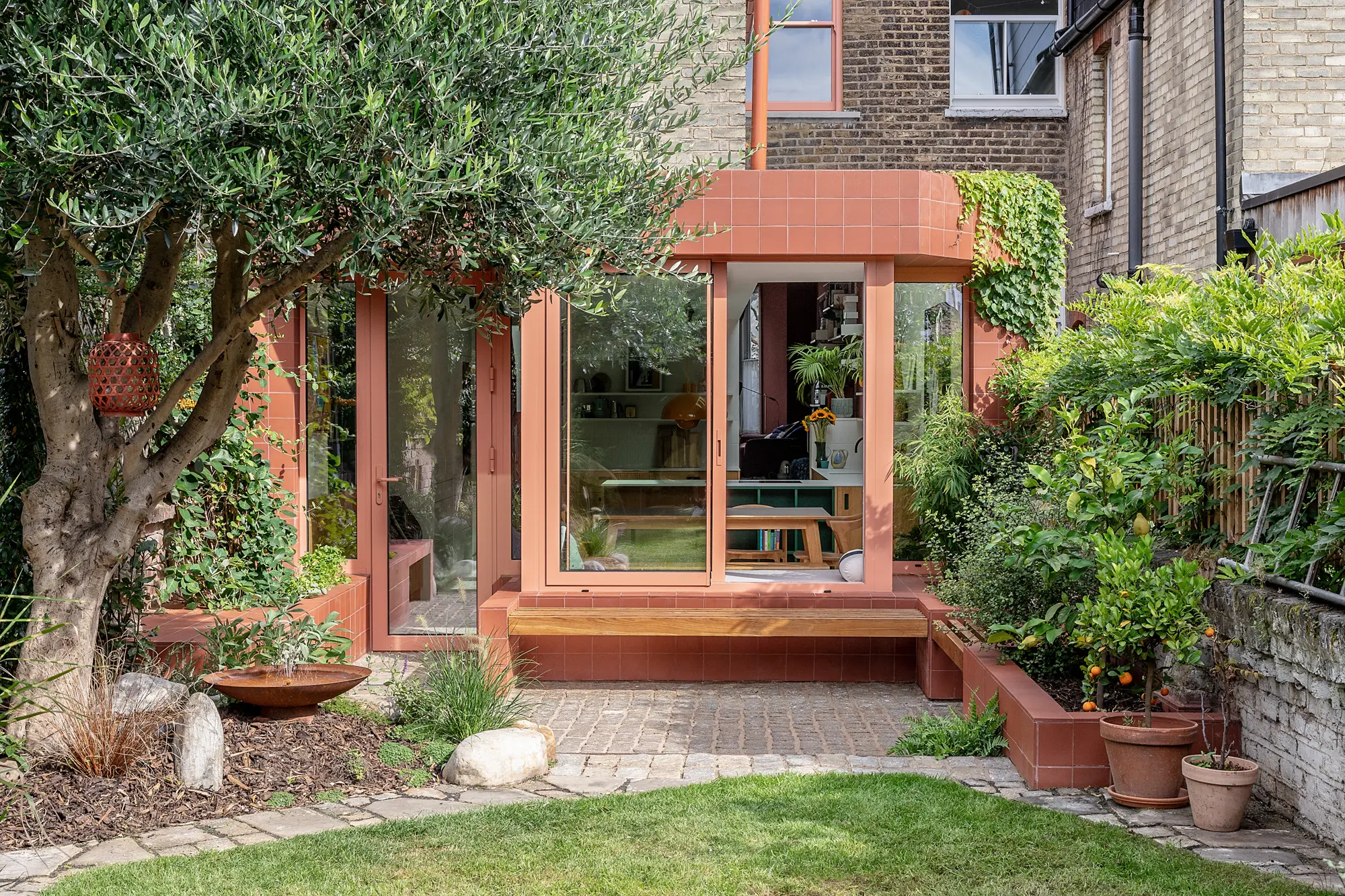
Office S&M Architects specified glazed pink pillow-shaped tiles for the exterior of this extended Victorian terrace house in North London. The pastel colours were inspired by nearby public buildings and are a scaled-up version of those found on the Hammersmith and City line of the London Underground. The tiles were custom made by Materials Assemble using extruded clay and hand craftsmanship.

Photo: French+Tye
Monolithic stacked brickwork
Use of concrete, clay and timber flow throughout this extension by DHaus. The stacked bricks sit above a concrete bottom section, with deep reveals concealing the sliding glazed pocket doors and a curtain track. The goal was to push the boundaries of what a facade is and shows how a simple wall can become a striking and dynamic building element that serves more than one purpose.
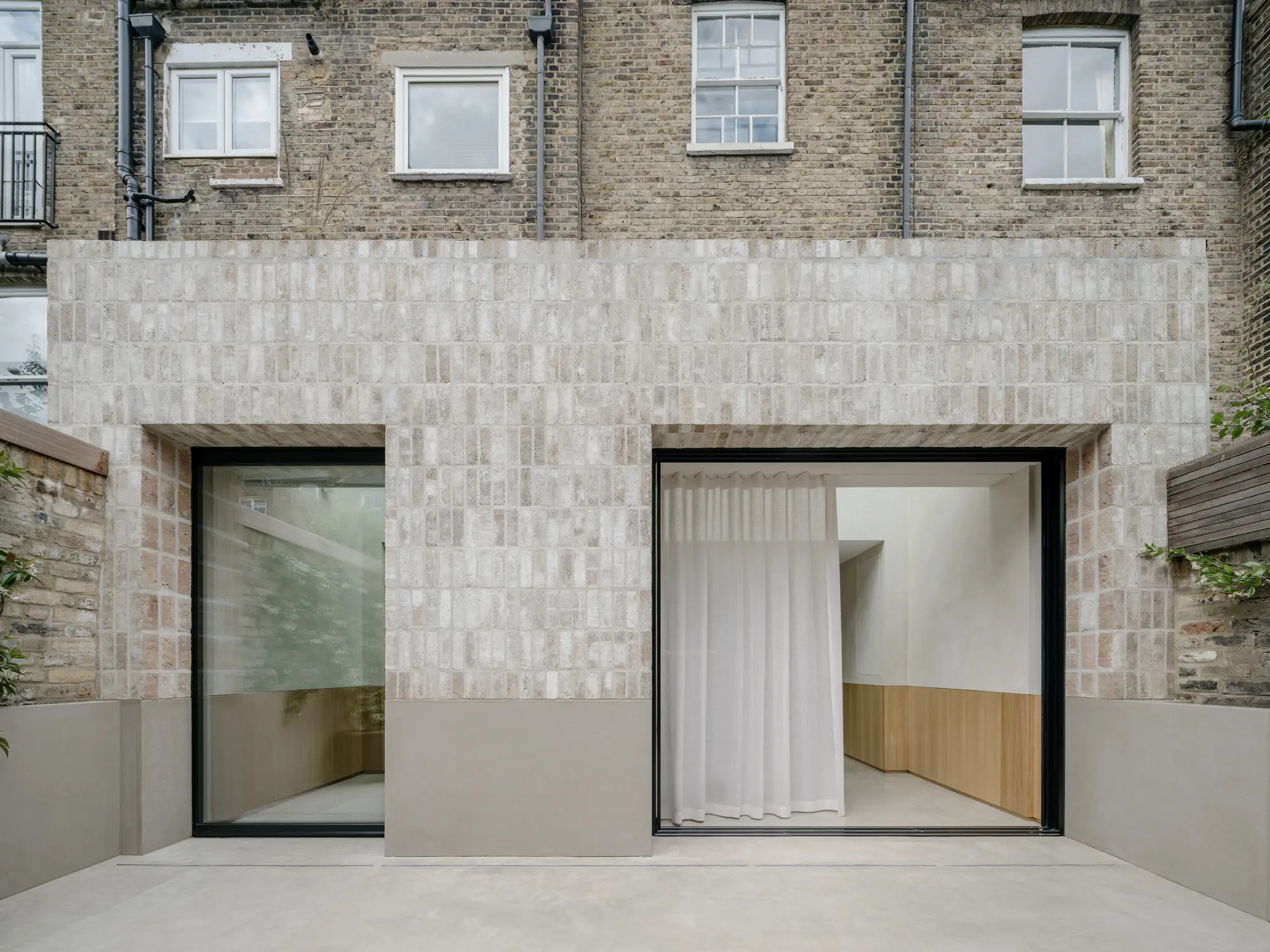
Photo: James Retief
Narrow-format timber battens
Timber is a popular choice for extension cladding and can be used in a variety of creative ways to create something extra special. Using ultra-thin strips of wood creates a modern feel, such as in this home extension. Russwood’s Lunawood collection is based on Scandinavian design, coming in tongue and groove and open rainscreen profiles. It’s also available for interior use.

Using timber cladding in your design

How can you create wow factor with timber cladding?
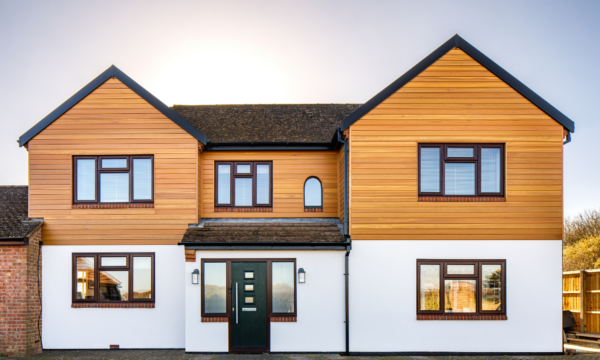
You’re after contrast, texture and design-led detailing. Use timber to highlight a key architectural element, helping to clearly define different parts of the build. Using contrasting tones is impactful, such as pairing a darker stained timber with a lighter board or through mixed board widths or oversized profiles. Also, texture – brushed surfaces or charred finishes enhance the natural grain and add depth, creating a more tactile facade. The most successful designs focus on one or two ideas, executed well, rather than trying to incorporate too many features at once.
Does horizontal, diagonal or herringbone application require specialist considerations?
Once you move away from vertical cladding, both detailing and installation require much more attention. Vertical cladding allows water to shed more easily, whereas horizontal and angled applications require careful design to manage moisture. Ventilation and drainage are key, and profile selection plays an important role in directing water away from the building envelope. Diagonal and complex layouts can deliver excellent design freedom, provided they are planned early and executed with the correct level of technical understanding.
Do narrow timber slats require special application?
With more individual boards comes more fixings, so alignment and consistency are critical. Visible fixings can become a strong design feature when carefully installed, adding detail to the facade. However, achieving this can be time-consuming and requires a high level of accuracy. Spacing and expansion gaps must also be manually set out to allow for natural timber movement. This is where a systemised approach can make a significant difference. For example, the Millworks Secret Clip system uses pre-spaced hidden clips, helping to achieve consistent gaps and a precise finish while reducing time spent on site setting out and fixing.
What materials pair well with timber for a mixed look?
Brick is a popular pairing, adding a sense of solidity and contrast to timber’s natural softness. Render or plaster provides a clean, contemporary backdrop, while metal elements (like aluminium or Corten steel finishes) create a more modern, architectural feel. One of the most striking combinations is timber with glass, enhancing natural light while allowing the warmth and texture of the wood to stand out, working to connect inside and out. The key here is balance – successful designs typically combine two or three materials rather than too many competing elements, allowing each to complement the others.
Metal standing seam
Metal cladding is a popular choice for a modern finish, looking striking when applied across both the roof and walls, such as in this project by Raum Architects. This Catnic Urban cladding is lightweight and low maintenance, plus it comes in a range of colours, meaning you can create a variety of looks.

Cork cladding
Sustainable material choices and low U-values were prioritised throughout this extension by Delve Architects. The natural cork material is used both as an external covering across the entire rear facade and for insulation. The cladding has its own distinct personality and the finished project has vastly reduced the house’s energy consumption and bills.
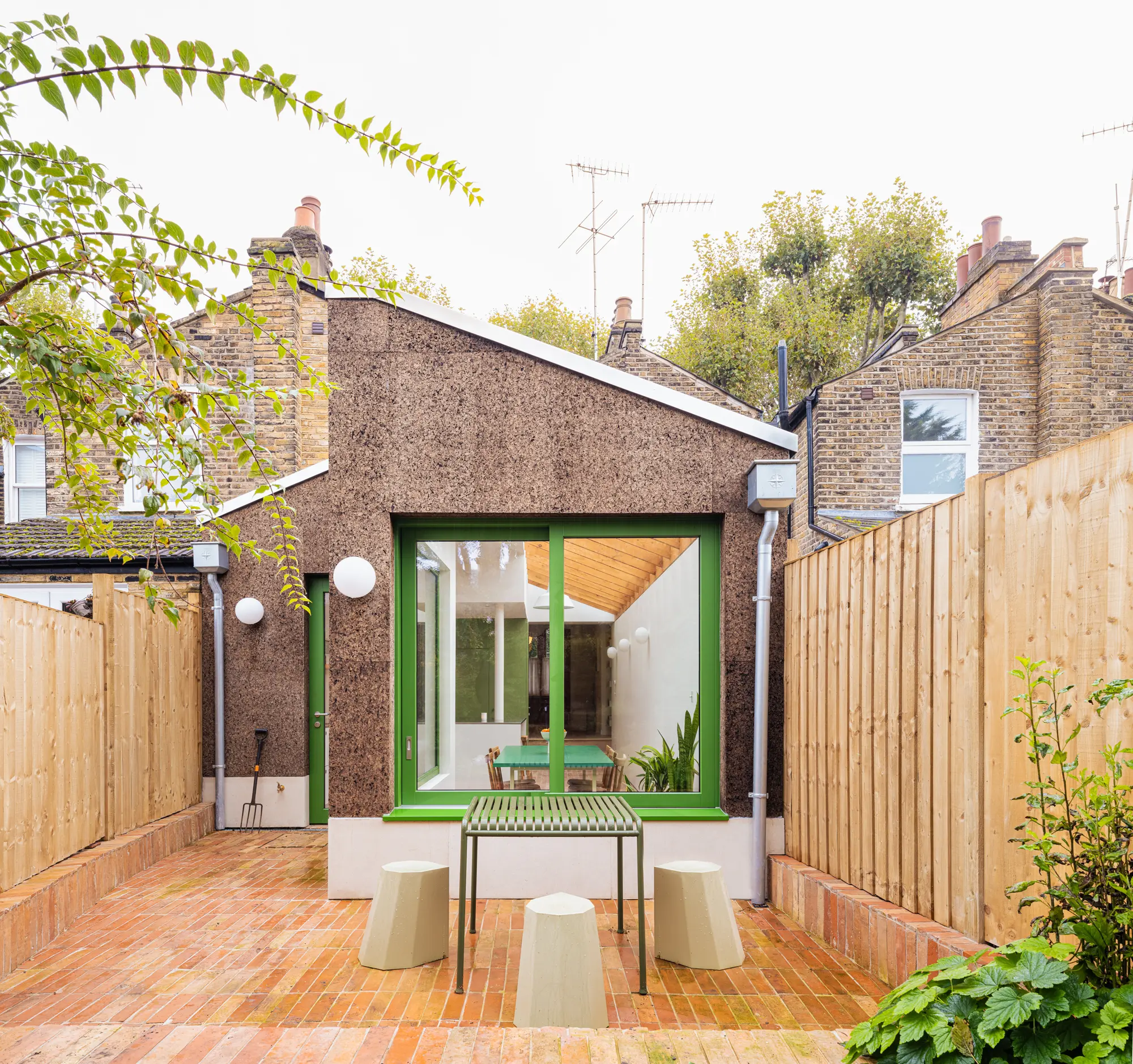
Photo: Fred Howarth
Basalt stone
Basalt is a hardwearing volcanic rock, typically black to dark grey in colour. EBBA Architects chose the finish for this extension because of the depth and texture it brings, as well as the way it works alongside an exposed steel lintel. The juxtaposition of the stone’s soft earthy tones and the steel’s clean industrial lines feel contemporary yet in harmony with the building’s Victorian origins.
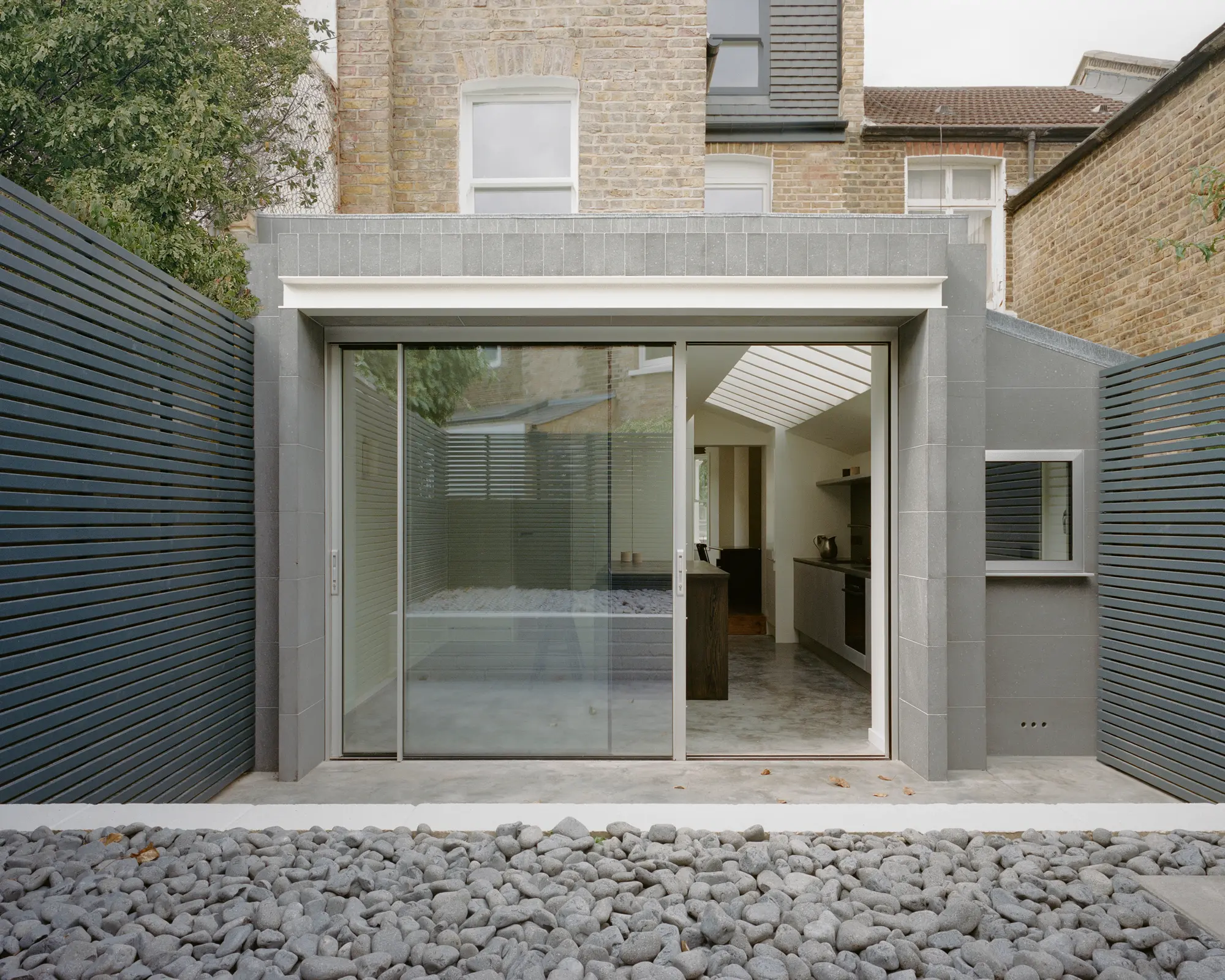
Photo: Richard Kahn
Up-and-over timber cladding
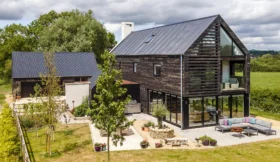
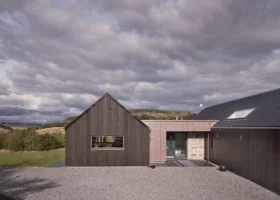
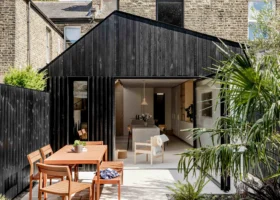
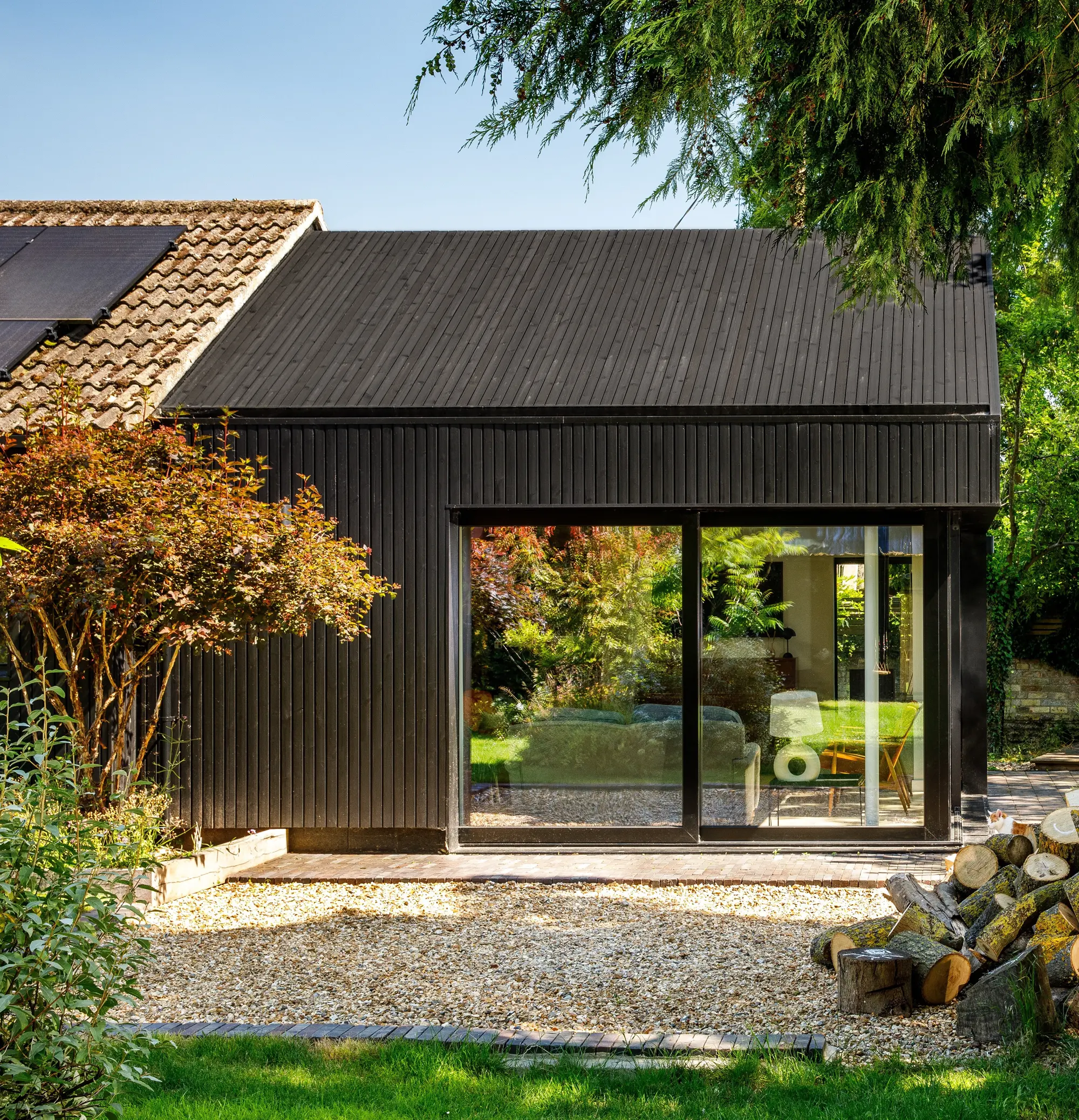
Black wooden cladding is a popular way to create a modern style, often used both over the roof and down the walls for a seamless feel that can look striking alongside the original facade of a building. This extension to a 1960s bungalow features Millworks’ ThermoWood pine cladding, finished with their MillCoat in Charcoal Black for a consistent, sleek and durable exterior.
How to get creative with your cladding

Mat Barnes is director at CAN architectural practice, a creative design studio committed to stepping outside of the box and creating unique spaces that enhance everyday life.
What’s the best way to create something special with cladding?
I recommend being bold and choosing something that creates depth. That way the walls will change throughout the day as the sun casts varying shadows as it moves. Choose a material that stands out against the green of your garden.
What do you need to consider when using less conventional cladding materials?
Different materials all have different maintenance requirements and will weather differently. Use masonry or tiles for reduced upkeep or a timber based material if you are willing to spend a bit of time refinishing it every five years or so.
What are the options for bringing a pop of colour to your cladding?
Tiles, painted timber or fibre cement panels are all great colourful solutions.
How can you get creative with conventional cladding options?
Think about how they are laid or set out and try and increase depth wherever possible. Shadows and depth increase visual interest that changes over the course of the day and throughout the seasons.
What cladding materials work well with together?
There is no wrong answer to this, it’s just how much contrast you feel comfortable with. Some prefer one visual quality to be kept consistent with the others contrasting. For instance, sticking to one colour but varying the materials, or using a single cladding type in a variety of ways which creates different shadows and textures.
Does it cost more to create wow-factor cladding?
Adding any complexity increases cost, but if you are clever about choosing just enough variety you can really transform an otherwise standard extension into something quite unique. Be bold.
Terracotta tiles
The timeless red warmth of terracotta is a historic building material, having been used since the ancient civilisations of Egyptians, Greeks and Romans. It had a resurgence in the Victorian era and remains much-loved today for its natural qualities. Emil Eve Architects has used the material to clad the extension to this terraced home, creating a warm and timeless look, with the glazing frames finished in the same terracotta hue.
Photo: Taran Wilkhu
Smooth plaster finish
To give the feeling of being carved out from stone, a mix of roughcast and smooth render helps to create a sculptural look to this extension by Sonn Studio. There’s a raw, earthy feeling that looks great alongside the natural deep wooden hues of the glazed door frames and internal plasterwork.
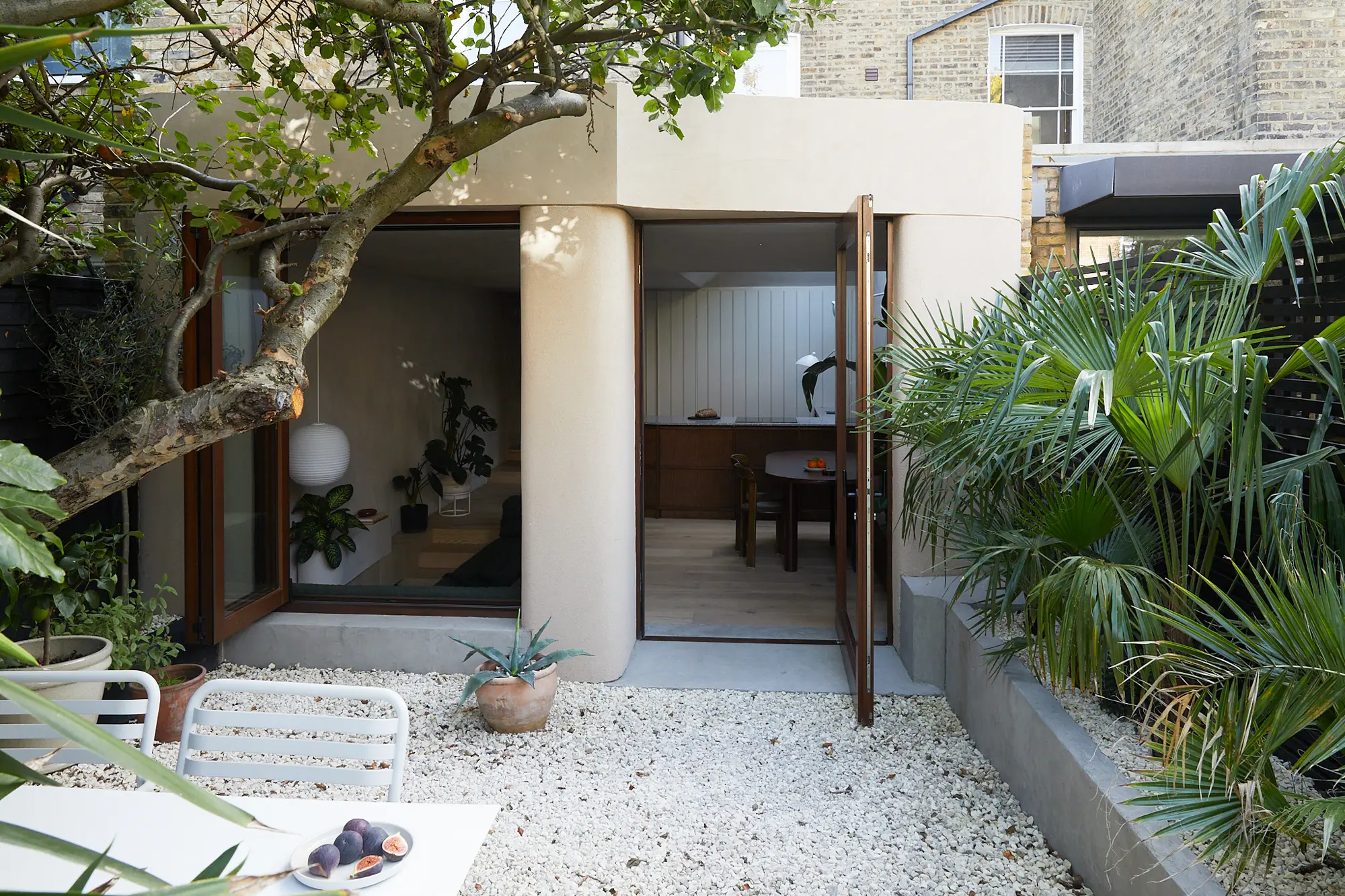
Photo: Phillipa Langley
Emily Batesmith
You may be interested in
Our sponsors