10 Steps to Your Dream Home – This is How to Self Build Your Own House in 2026
Thinking about self building a house from scratch in 2026? From finding the perfect plot of land to organising your finances, following these steps will help to ensure your dream home building project is a success from start to finish
Are you wondering whether you should build your own house? Self building will guarantee you a bespoke property that ticks all your boxes – both in terms of the design and lifestyle it offers. Taking a project from concept to completion may feel daunting, but over 13,000 of us do it every year – and there’s no reason you can’t be one of them!
There will be stresses and challenges along the way. After all, you’re about to embark on an adventure that calls on all your resources of imagination, patience, commitment and pragmatism. And at the end of that journey, you’ll have created something truly individual, that responds to your plot, budget, design tastes and lifestyle ambitions – what’s not to be excited about?
So, where should you start when building your own house from scratch? From finding land to planning permission and self build costs to structural systems, here we’ve set out 10 steps to follow to kick start your 2026 self build and create a home that meets your needs, budget and design preferences.
1. Find a suitable plot of land for your self build
If you want to build a house, you first need a suitable plot of land, and identifying the perfect site can be a hurdle. Land for one-off properties is not always obvious to find – but there are lots of self build opportunities out there and plenty of online resources to help you make a success of your dream home building project.
Build It’s top tips for maximising your chances of finding the perfect plot
It’s best to zone in on the location you want to live in, rather than searching over too wide an area.
Drive round the region looking for potential infill sites, side gardens or unused buildings, and keep an eye on planning applications in your target area.
Let friends, family, local pub owners, estate agents etc know you’re searching for a plot to build a house on.
Is there a run-down property that’s screaming out for a knock down and rebuild project? A demolish and replace project could be the perfect route to a new home.
Keep an eye on planning applications in your target region, too, as applicants could be looking to sell on rather than build a house on the land themselves.
Remember that you need planning permission in order to self build a new home, so be very careful when considering plots that don’t have consent in place – cheap land is probably too good to be true.
Look out for custom build opportunities, as serviced plots with a specialist developer could take a lot of the time and risk out of the process.
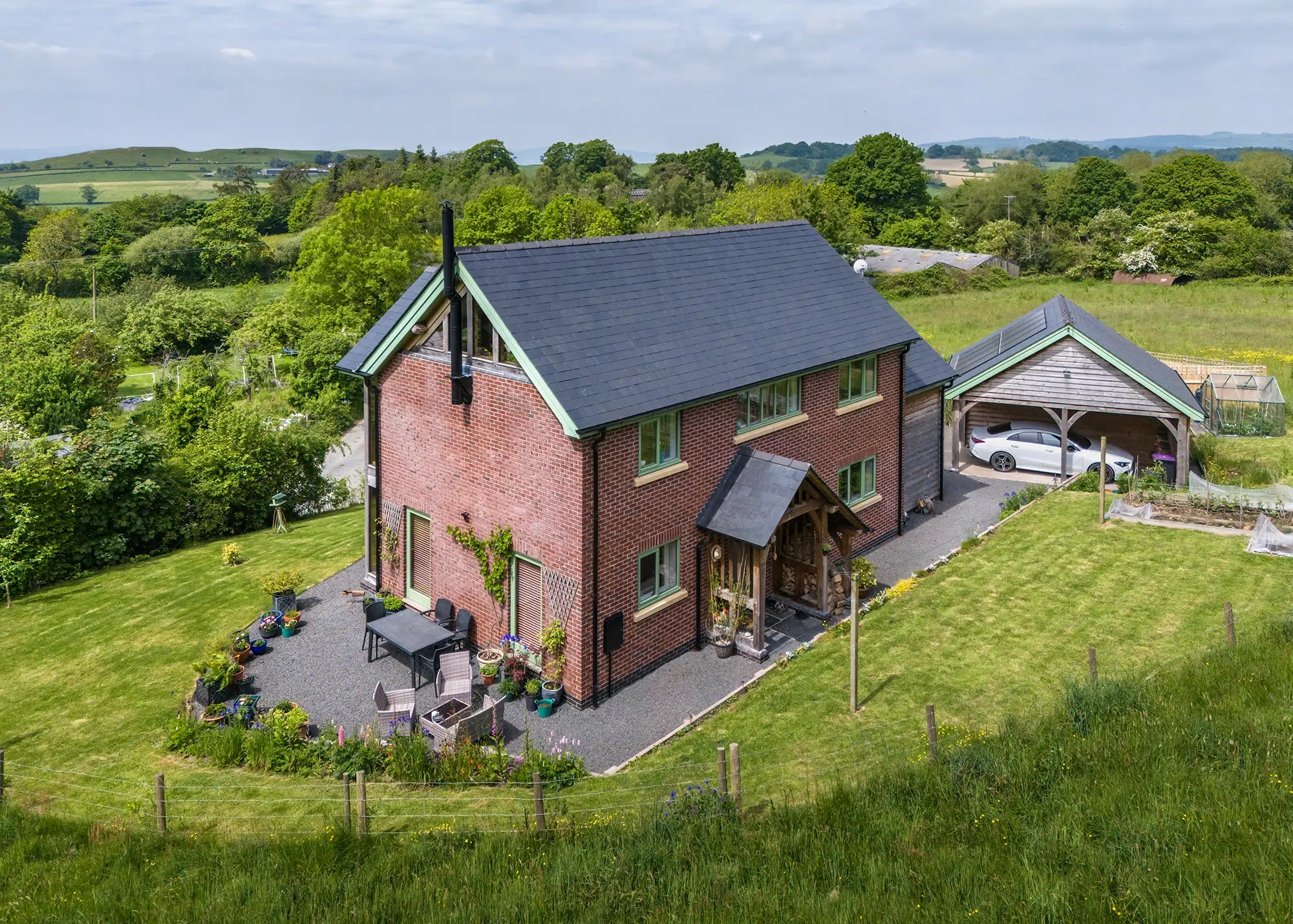
When searching for their self build site, Peter and Melinda Young discovered an idyllic hillside plot with a glorious outlook across a valley. “We stood looking out over the valley to Montgomery with incredible views of the castle,” says Peter. “It was stunning, scenic and perfect.” Neither plot had a connection to electricity or water but the couple decided the location outweighed the inconvenience. They negotiated the price down by £20,000 and, in 2017, purchased their self build site. Photo: Nikhilesh Haval
What should you check before putting in an offer on a plot of land?
Think you might have identified a viable site for your self build project? Our quick-fire plot buyer’s checklist will help you decide:
Am I ready to act quickly? It’s important to have your funds and/or borrowing lined up and legal representation ready to go so that your offer looks enticing to the vendor (if you’re buying at auction, this is essential).
Is planning permission in place? The outline or full consent shouldn’t be about to expire, as this could put your dream home project in jeopardy. Any conditions attached to the permission must be acceptable to you.
Are there any fees? Double check whether you will be liable for a Section 106 charge or any other financial contributions to the council as a condition of the planning permission. These could increase your project costs markedly, and may need to be accounted for in your offer.
Am I getting all the land? Ensure the plot area that’s for sale is exactly the same as that indicated on the current planning permission – otherwise you could run into trouble with ransom strips and other issues.
Can I change the consent? The majority of self builders will want to tweak the design to some degree, so think about whether you want to revise the existing planning permission and if these amendments are realistic.
Are there any other obstacles? Check whether the plot has a right of access to the public highway and ascertain if any legal issues, such as restrictive covenants, might bring extra costs or prevent you building.
Looking for a plot of land to build a house on? Take a look at PlotBrowser.com to find 1,000s of UK plots and properties, all with outline or full planning permission in place
Premium Content
Downloadable E-Guide
Where should you start when planning your home building project? Build It’s in-depth downloadable guide to self building a house contains everything you need to know to make your project a success.
It’s essential to have the right funding in place to successfully see your project through to completion – the classic Grand Designs television drama of running out of money part-way through can easily be avoided with careful planning.
There are dedicated self build mortgage products widely available through brokers, such as BuildStore and Mansfield Building Society (winner of Best Self Build Mortgage Lender at the 2025 Build It Awards). These are different to standard mortgages as funds are released at points throughout your project rather than in one lump sum.
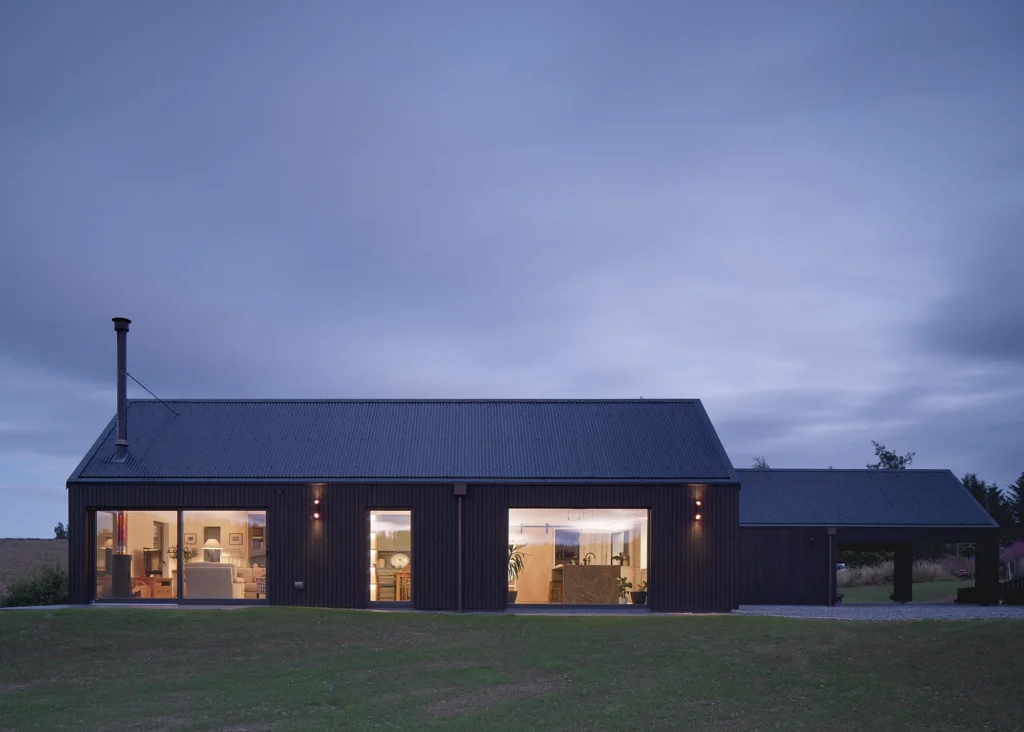
Neil and Sandra Caul built a multi-generational home in the Angus countryside; a striking, futureproof farmhouse that’s rooted in the area’s agricultural past. The 247m² self build cost a total of £640,000 (£2,591 per m²) and took 2.5 years to complete. Photo: David Barbour
If your equity is in your current home, it is possible to borrow the money you need before selling – but make sure to always talk things through with a specialist advisor to assess what’s best for your individual circumstances.
Looking for an indicative cost for your self build?
The Build It Benchmark Reportuses award-winning HBXL software for a quick and cost-effective way of pricing up your project.
Is your budget realistic?
Will there be money left over for your dream kitchen?
Amazing plans but no idea of cost?
If you are looking for a broad outline of your overall build costs before you decide which route to take, why not send us your plans and request a Benchmark Report? Find out more here
Once you understand how much you can realistically spend on your self build, you’ve got a budget set – but it’s important to know how much to put aside for the different aspects of the project to make sure you don’t push your finances more than you can afford. Be realistic about how much the different stages will cost you by focusing on exactly what you want to achieve.
For instance, the project management route you choose will impact on costs, while the materials spec is a huge factor in the final price. The readers’ homes case studies in Build It always include a project cost breakdown, to give you a realistic idea of how other people divided up their budget. Use these as inspiration, but remember that costs are always changing, especially at the moment.
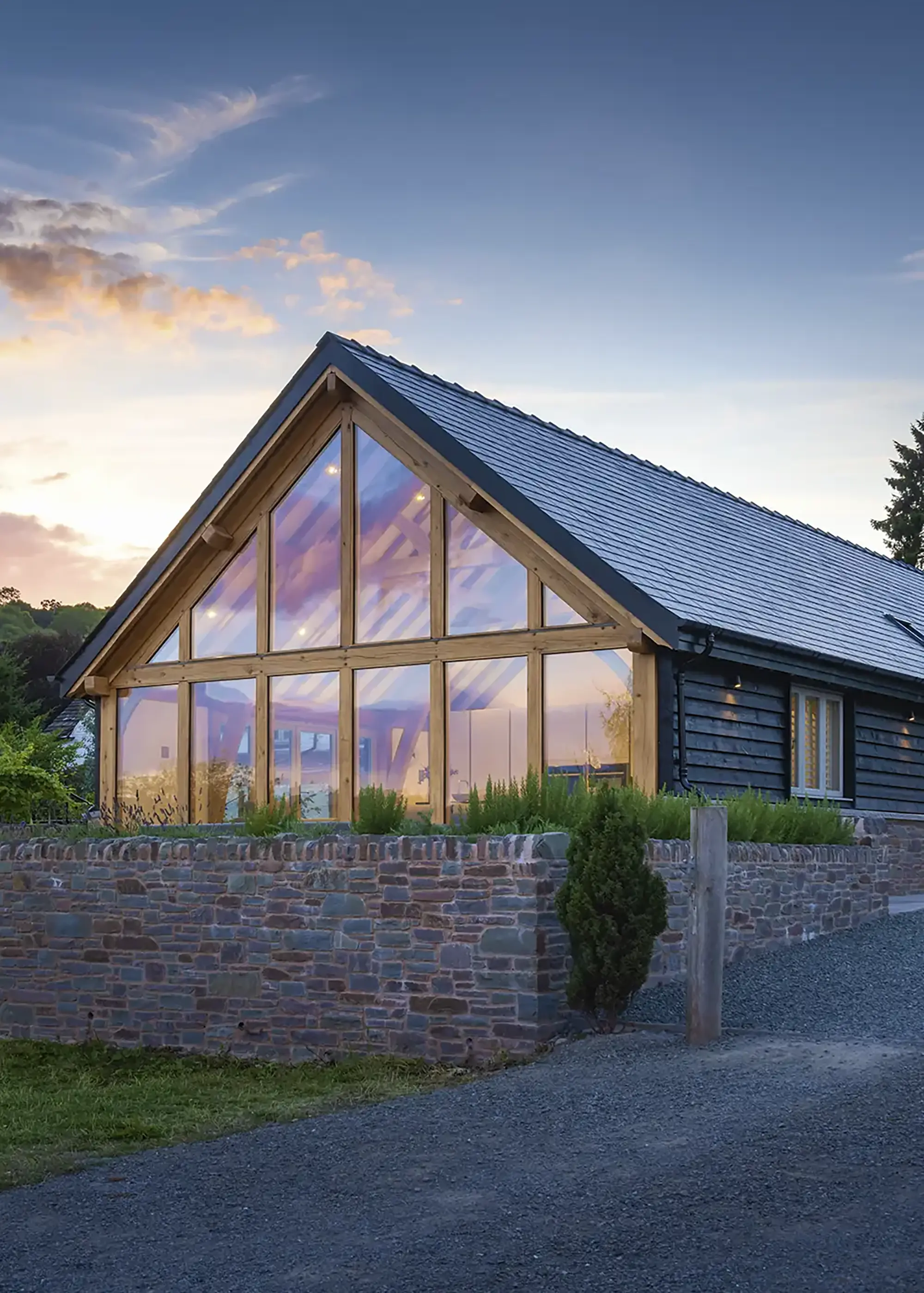
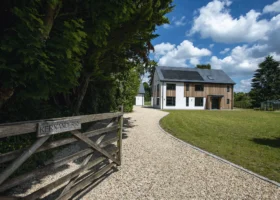
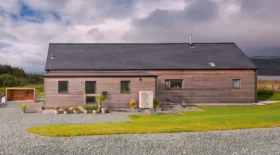
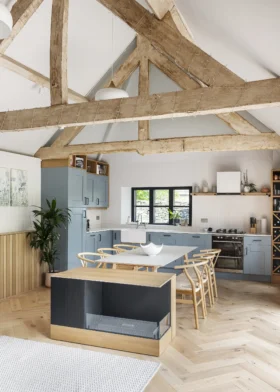
After much back-and-forth with the planners, Graham and Diane Roberts built their dream oak frame home and a separate garage with guest accommodation on the car park of a former pub in Wales with glorious mountain views. The barn-style home cost the couple a total of £365,000 including the main home and garage. The oak frame itself cost £120,000. Photo: Nikhilesh Haval
You should always include a contingency within your budget costs, because even with the best planning, things often change. Put aside at least 15-20% of your overall self build budget for use on unexpected costs, such as additional foundation requirements or unavoidable delays. If you still have the contingency towards the end of the build, you can consider upgrading interior finishes or landscaping schemes.
4. Engage a professional home designer to transform your ideas into a reality
Employ a designer who understands your vision and is on board with your requirements and budget. Look for a professional who’s completed similar projects to yours and go on personal recommendations, if possible. Remember that not every firm will be right for each individual homeowner, so look around.
Understand what experience and qualifications a designer has – not everyone who can design a new home is an official architect. Architects are protected by a regulatory body, so you can guarantee they’ve gone through official training and have a high standard of competence. There are also architectural technologists, in-house designers at package home suppliers and companies who specialise in house design.
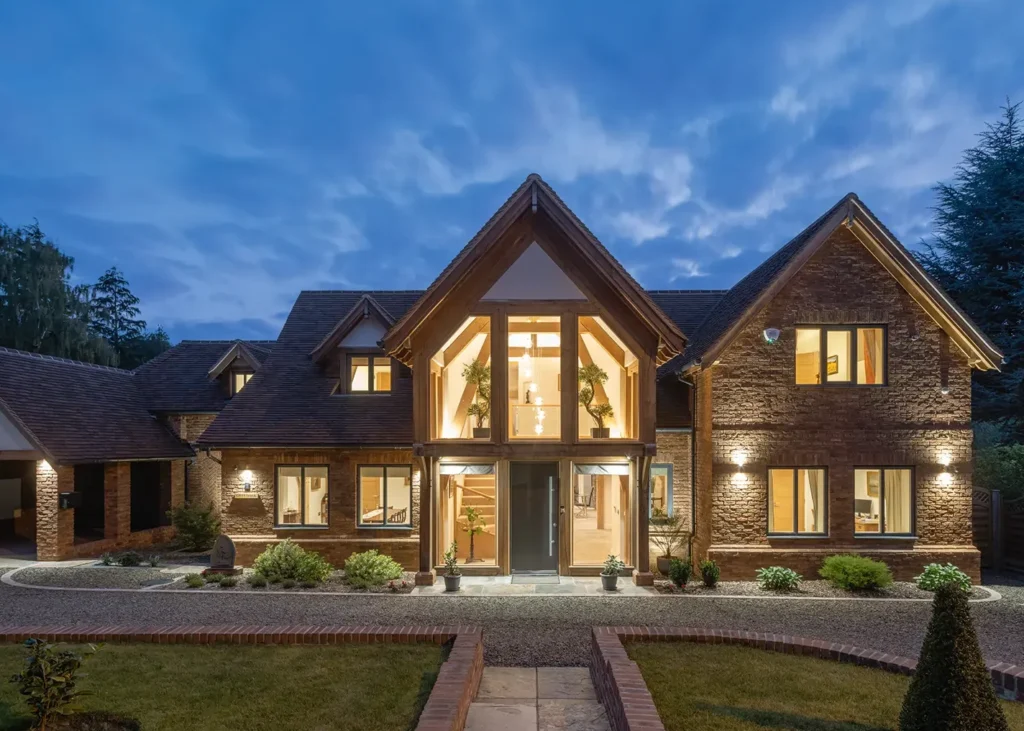
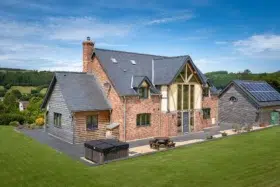
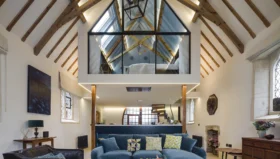
The Deacons’ traditional-style oak home in Surrey, designed by Oakwrights, features a striking glazed gable at the front of the property, creating a dramatic appearance for maximum kerb appeal
Some people even DIY the design themselves, although you will then need to secure someone to turn them into technical drawings for Building Regulations and construction, so not advisable unless you have experience. What you pay for this phase will depend on the professional you’re engaging and the complexities of your design and plot.
Whether that means an open-plan family space with a large kitchen where you can keep an eye on the kids while you cook, or a luxurious master suite with its own walk-in wardrobe – you can make sure you have the right amount of room where you want it.
You'll be able to guarantee energy efficiency & low bills
Your home will be built with the landscape in mind, whether that’s framing beautiful views; having inside-outside rooms with big spans of glazed doors; or maybe an upside-down layout with the living space on an upper storey to get the best sunlight.
Enjoy light-filled living throughout the year
Your designer will carefully plan window positions; focusing on how the sun moves across your plot to draw up your floorplan according to which rooms you’ll be in at different times of the day, all to make sure you get the best quality of light when you need it. You can use natural warmth to reduce bills and design in mechanisms to stop spaces from overheating.
Create something truly breathtaking & personal to your tastes
Being in control of your future home and the budget going into its construction gives you the opportunity to create some truly breathtaking results that you’re unlikely to find in a developer house. You’ll be picking the products, from build methods through to internal finishes, so you’ll choose where to create impact.
You can create somewhere you'll be able to live comfortably for years
It’s inevitable that every household’s needs change as time goes on. So if you’re planning to live in your self build for decades to come, you can design flexibility into the floorplan to ensure it can evolve with you.
5. Choose a structural system for your home building project
Timber frame, SIPs, oak frame, brick and block or ICF – which is the right structural system for your self build? Here are the pros and cons of the different options:
Timber frame
Timber frame is able to create highly-efficient, low-energy bespoke homes. It’s also an ideal system for supply-and-erect packages, where one company delivers your home’s structural kit and assembles it for you on site.
Open and closed panel timber frames are most common – the difference being the
level of prefabrication done in the factory. The former arrives to site without insulation (though it may be supplied as part of the package), while closed panel systems are insulated and sometimes complete with windows, services and cladding before
arriving to site.
Timber frame offers quick build times, too, both in the factory and on site – expect around 12 weeks for the structure to be manufactured and as little as 5-10 days to erect it.
Rod and Trudy enlisted Cambridgeshire-based timber frame supplier Potton to design and erect their home’s timber frame superstructure, including the installation of the closed panel system, which was prefabricated offsite with the insulation built-in. The 237m² house cost a total of £454,628. Photo: Potton
Oak frame
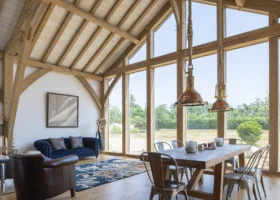
Oak frame is a perfect option for those looking to create a home that combines timeless character with modern efficiency levels. Most oak home suppliers tend to have in-house or partner architects who will help you either draw up a bespoke scheme or adapt one of their designs to your site.
Contemporary oak homes comprise a structural skeleton, including the walls, roof and floor joists. They’re fabricated in a factory or workshop and are speedy to build – some taking just two to three weeks once on site. The skeleton will then be encapsulated with insulating panels, creating a highly airtight building envelope.
One of oak’s main attractions is the ability to turn the frame into an impressive
design feature. For example, leaving the oak trusses exposed throughout your home
or filling part of the skeleton with glazing (such as a gable end).
SIPs are formed of an insulated foam core, sandwiched between two flat pieces of oriented strandboard (OSB). This makes for a very lightweight and airtight prefabricated structure that’s speedy to assemble.
As SIPs are so strong, they can be used to form walls, ceilings, floors and even truss-less roof spaces – a great option if you’re looking to maximise living space in your new home with a pre-insulated room-in-the-roof, or to create wow-factor vaulted ceilings.
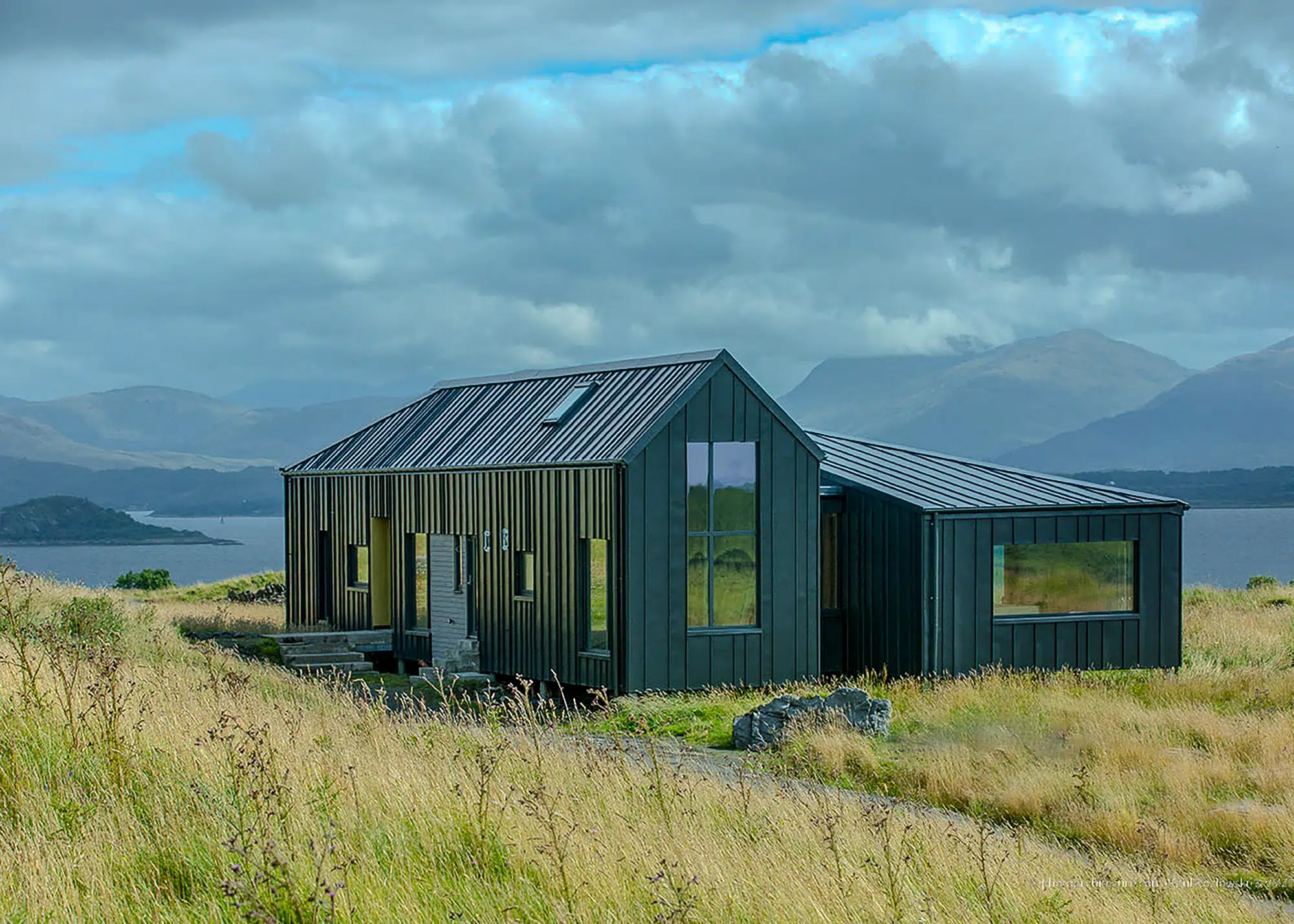
Baligrundle by JML SIPs took home the 2025 Build It Award for Best SIPs Home. Set on the exposed Isle of Lismore, the 180m² home responds to both the landscape and the client’s brief for a modern, low-energy replacement dwelling that could withstand harsh weather while treading lightly on the croft. Photo: JML SIPs
If you’re interested in building your home with SIPs, be prepared to make a lot of the design decisions up front and at the early stages of your project. Changing predetermined, factory-made layouts and design features once manufacturing has begun can be expensive and delay your build.
ICF is an innovative structural system which involves stacking a series of hollow blocks made from expanded polystyrene or wood fibre cement and filling them with ready-mixed concrete to create an exceptionally sturdy build. Once these blocks are in place, the full-fill concrete and foam combination offers excellent thermal performance and U-values throughout.
One of the major advantages of opting for ICF is the ability to create extraordinary architectural designs because of its innate strength. The foam blocks can be cut to create striking curves, cantilevers and grand, wide openings that can be filled with glazing.
ICF is also superb for those looking to incorporate a basement into their house plans. This is because the walls are highly watertight, preventing any damp or water ingress once the build is finished.
Brick and block construction is favoured by many self builders for its familiar feel and budget-friendly price point. External walls are created using a cavity wall construction – an internal and external skin of brickwork with a gap between them (filled with insulation). These are then held together with wall ties.
Masonry homes are built and insulated on site, unlike prefabricated structures. So, while you’ll always get best value by sticking to the planned design, it’s typically easier to accommodate changes once the build has commenced, such as the position of internal walls or window openings. Materials are generally readily available on short lead times, too, so work can start quickly. However, as masonry is a wet building system, progress is slower and can be delayed by poor weather conditions.
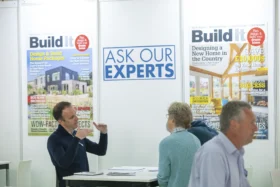
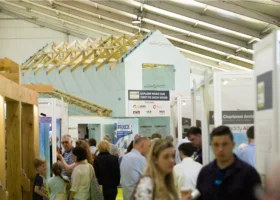
Talk to the experts about your project and learn from their years of experience at Build It Live. Watch live presentations on a variety of topics, meet hundreds of suppliers and book a one-to-one appointment with an expert – including architects, project managers and finance specialists.
Build It Live takes place three times a year in Kent, Malvern and Exeter. The next show will be on 21st and 22nd February 2026 in Maidstone, Kent. Claim a pair of free tickets today and start planning your visit.
What you can build will be at least partly dictated by what your local council will allow, so early contact with the planners is the best way to figure out if your idea is viable. Getting pre-application advice will give you a good feel for whether your plans will pass the formal application, and maybe suggest what changes will give it a better chance of success.
However, remember that this is just advice, and doesn’t guarantee permission – if a new case officer comes in before you submit your planning application, for example, you could be back to square one.
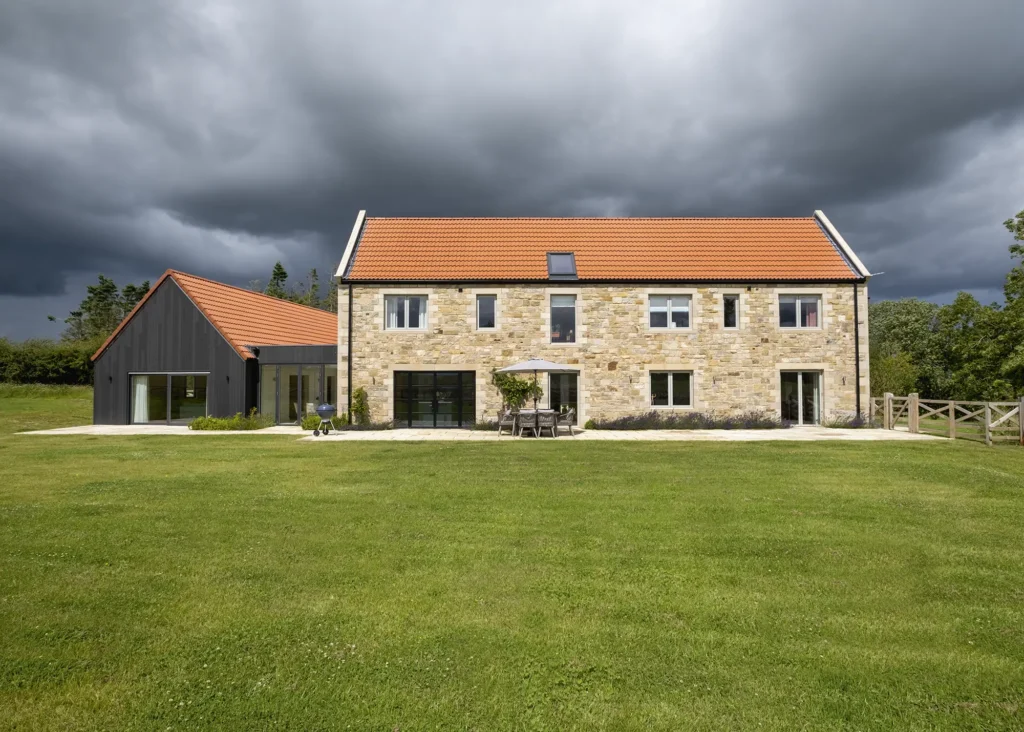
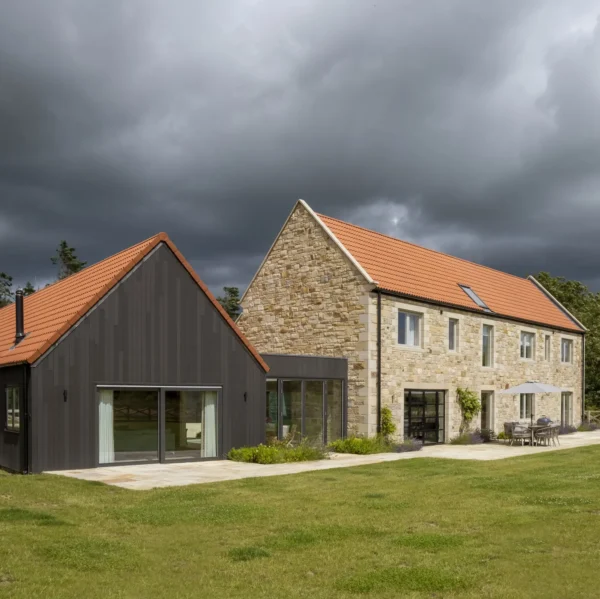
After a drawn-out planning process which involved a rejected application, Arthur and Lydia Achard were finally able to build their new house on a rural plot in Northumberland. With the help of Giles Arthur Architects and Fleming Homes, the couple successfully built a spacious barn-style home complete with stunning interiors and high quality finishes. Photo: Kate Buckingham
You can also enhance your chances of success by understanding the local planning policies. Look into if there are any planning constraints on your plot; investigate what other builds have been given the go-ahead nearby; and let your neighbours know your plans to head off any objections.
7. Decide on a project management route for your self build
Self building doesn’t mean you have to do it all yourself – laying bricks, plastering walls and suchlike. In fact, surprisingly few bespoke homes are built this way. Instead, most people team up with specialist companies that take the stress out of some of the key elements of the project.
After finding the perfect plot in the Suffolk countryside, Suzanne and Steve Richardson enlisted Cocoon Architects to bring their design ideas to life, and Frame Technologies for their efficient timber frame shell, which they erected themselves after commissioning on a supply-only basis. The project won the reader-voted Best Self Build Home at the 2023 Build It Awards. Photo: Matthew Smith
Your options include
Being very hands-on This involves hiring a builder and taking on the role of project manager yourself, including finding trades and suppliers, whilst overseeing spending and schedule.
Employing a main contractor or professional project manager to oversee the works for you: You’ll still be involved, but not necessarily having to make every call, which takes the pressure off.
Working with a design and build specialist The company will take the structure of your home up to weathertight stage, and you can then take the reins or use a contractor to finish the fit out.
Turnkey packages These home specialists will do everything on your behalf, handing over the keys at the end for you to enjoy your new bespoke home.
CASE STUDY This couple built their dream home in Hampshire
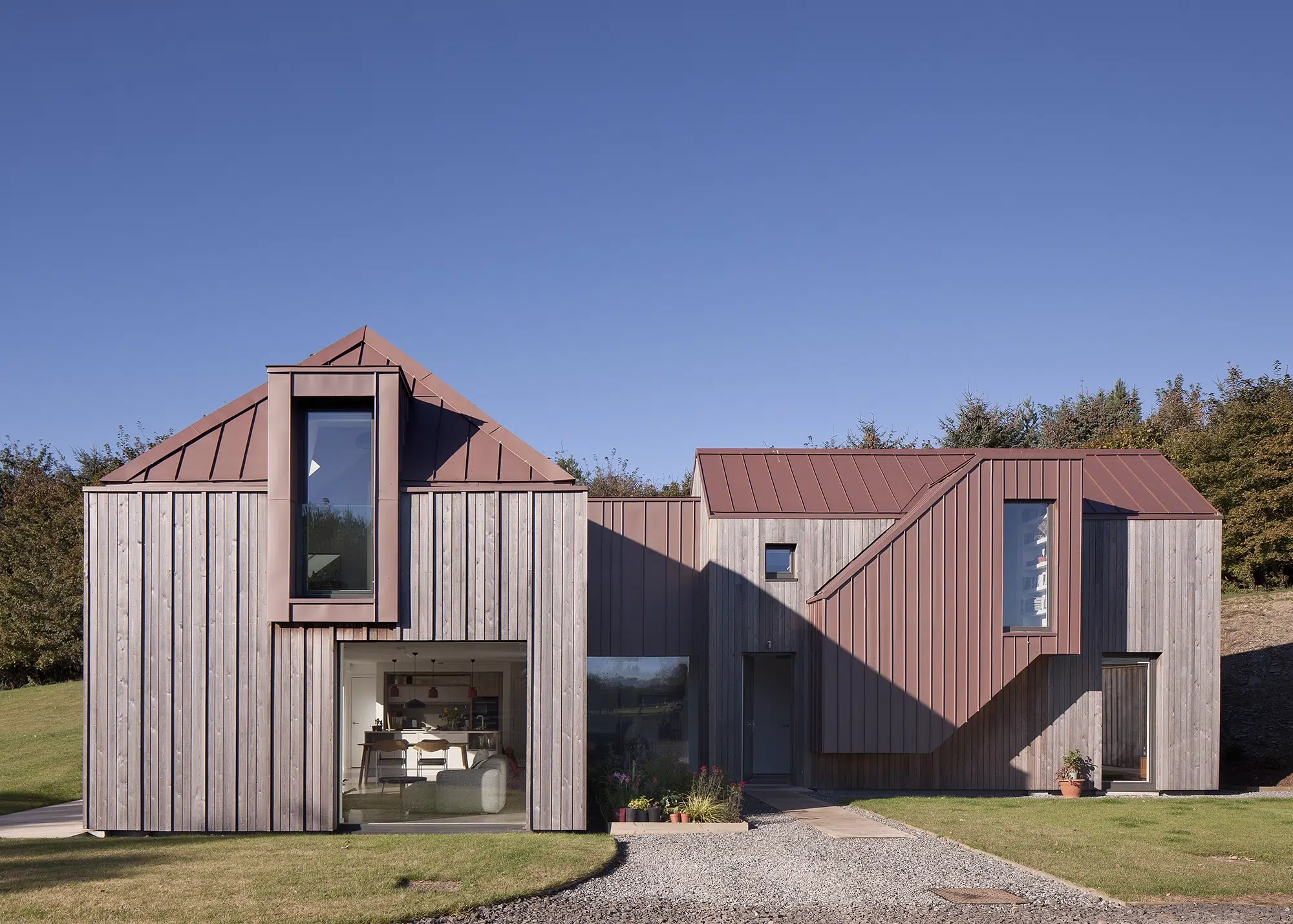
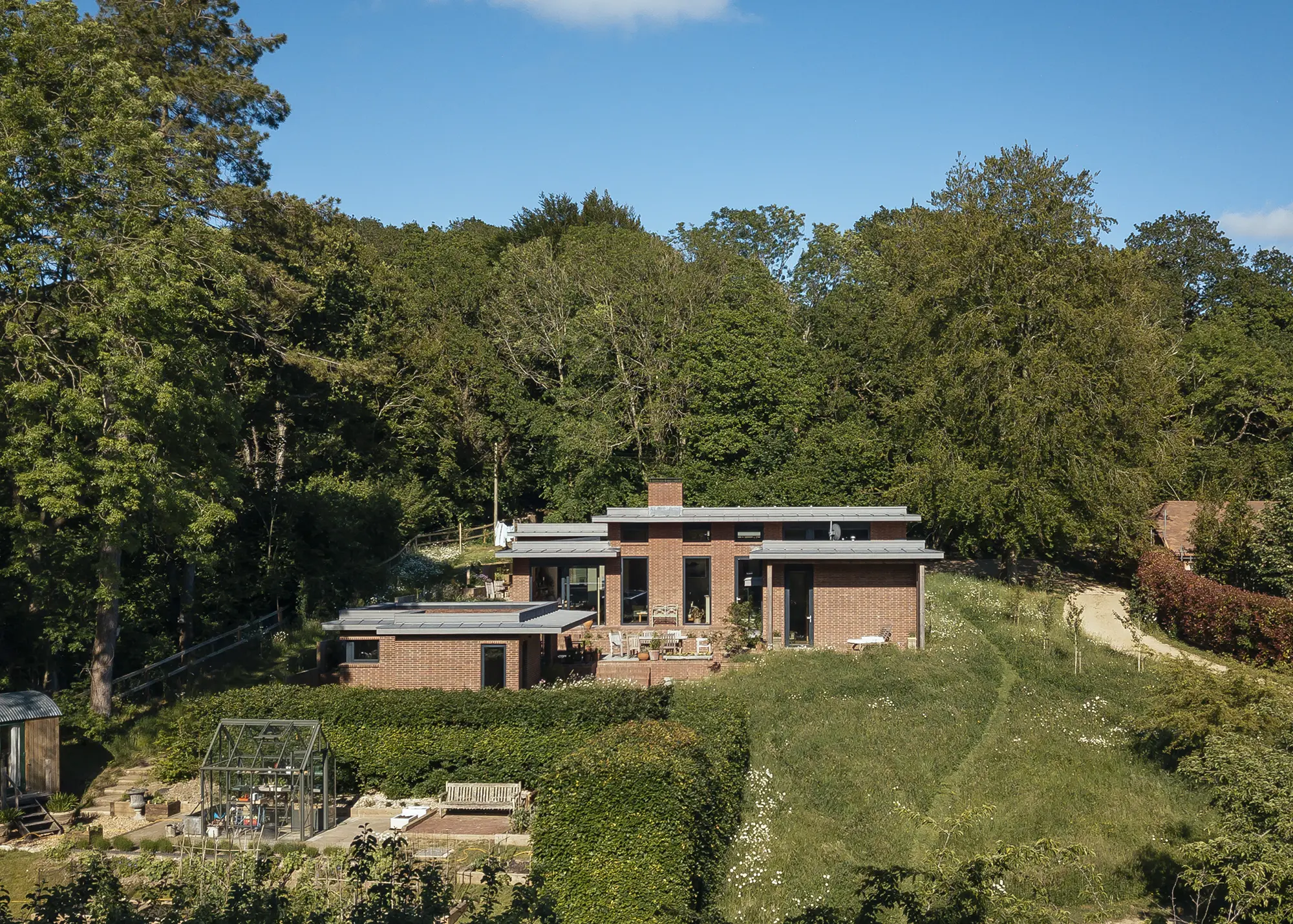
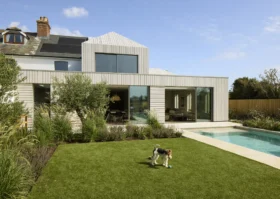
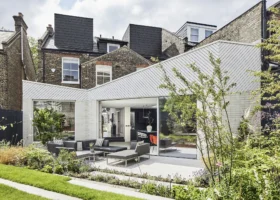
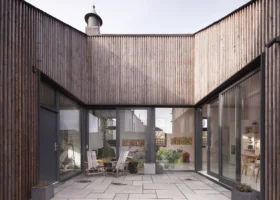
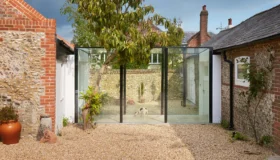
Keen to downsize to a smaller house, the owners of this contemporary courtyard-style dwelling in the New Forest decided the best way to achieve the home they wanted was to create it themselves. They worked with the team at PAD Studio to craft the plans for their new house, which replaces a small Victorian cottage on a plot that they’d previously lived next door to.
Photo: Jim Stephenson
The project was subject to a local planning policy, which would have limited the floor area of the house to 100m², to preserve the size of small homes in the New Forest. PAD worked with the planning department, engaging in collaborative discussions throughout the process, which involved going through the pre-planning stage.
Photo: Jim Stephenson
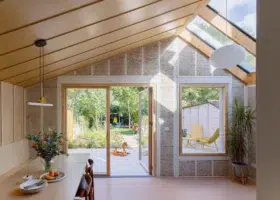
Ultimately, they were permitted to incorporate a conservatory space into the floor area by adhering to conservatory planning rules – 75% of the roof is glazed and more than 50% of the walls are made of glass. Taking this route created an additional 17m² of precious floor space, which now accommodates a spacious and inviting, sun-soaked dining area.
Location
Hampshire
House size
117m²
Designed by
PAD Studio
Project route
Architect designed, homeowner hired main contractor for construction
With PAD’s help, the owners went through the formal tender process with four companies to find a suitable builder. The firm they ended up choosing had worked on a job with the practice previously. From this introduction, the homeowners developed a positive working relationship with their builder that contributed to this stunning, single-storey home.
How can Build It help move your project forward?
Build It magazine
Every issue of Build It magazine is packed with inspiring real life projects, product and materials options for your home, plus advice from leading experts across all areas of self build, from planning and design through to project management.
Build It Live
Talk to suppliers and see products in person by visiting one of the annual Build It Live shows. Build It Live is held three times a year in Kend, Oxfordshire and Exeter. For more information and to find your nearest show head to the Build It Live website.
PlotBrowser
Start searching for your perfect plot now over on Build It’s dedicated plot finding website, PlotBrowser which lists 1,000s of building sites for sale across the UK. Set up alerts for your search area, too, and be the first to know when plots fitting your requirements are added to the site.
Training courses
Would you like to get detailed know-how on what’s needed to successfully self build without having to leave the comfort of your home? From finding land to design and completing your project on budget, there’s a Build It Virtual Self Build Training course for each stage of a project.
Build It's website
Build It’s website is packed full of advice for whatever stage of the self build journey you’re at. Get answers to your specific project questions direct from the experts with Build It’s Q&A service
Build It's downloadable E-Guides
Whatever stage of the journey you’re at, Build It’s detailed & user-friendly downloadable E-Guides will put you on the path to project success. Simply sign up and create an account to become a Premium Member or log in to access and download each guide from your My Account page.
8. Confirm the necessary building contracts & insurance
No doubt you want to get started on site as soon as possible, but before any work can begin on your self build house, it’s crucial to get all the right permissions in place and the appropriate contracts finalised to make sure that your project is protected.
Sarah and Matt Switzer partnered with Welsh Oak Frame to create their dream self build home in the Essex countryside. The mortgage company wouldn’t allow timber cladding on the oak build, so the couple decided to render the main part of the property and used painted cedar planks on the side section and rear. Photo: Nikhilesh Haval
We’re talking about planning permission; building control approval; any special reports and consents, such as bat surveys, tree protection etc; warranties and insurance; health and safety; and formal contracts with your contractors and trades. Always double check everything’s in place so you can start your project with no worries.
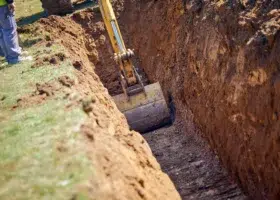
Groundworks are the first on site progress for your house to start physically taking shape. That means clearing vegetation, perhaps levelling the plot and marking up the spots for the foundations. Getting the locations accurate is essential for your planning permission and the structural shell – especially if you’re using timber frame or another method that requires precise dimensions.
In search of a warmer, more manageable house to enjoy her retirement, Fiona Henderson built a contemporary timber frame home in Aberdeenshire on her own land. Designed by Fiddes Architects, the project sailed through the planning process. The project cost a total of £545,000 as Fiona already owned the land. Photo: David Barbour
The type of soil will have an impact on what kind of foundations are suitable and how deep they need to be. Your site appraisal should have confirmed these details, but sometimes it’s not possible to know exactly what you’re working with until you start digging into the ground.
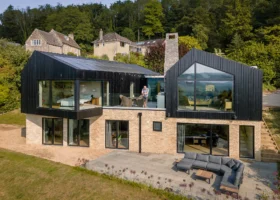
When Calum & Sally Land found a run-down bungalow in Bath, they decided it was the perfect spot to knock down and rebuild their new home. Photo: Pete Helme
After the main structural shell of your house is in place, you need to get it wind and watertight. That means fitting windows and external doors, making sure the roofing is sealed etc. Now’s the time to address airtightness, too. Then comes the first fix stage – this includes the infrastructure work (electrics, plumbing and suchlike) up to and including the plasterboarding. Second fix involves everything afterwards: kitchens, flooring, skirting, doors, painting etc.
FAQs
What do I need to do when the build is finally complete?
With building work complete and the interiors finished, you’ll be ready (and probably raring) to move into your dream home. There are a few practicalities to consider – such as obtaining the completion certificate from building control, ensuring any small issues are dealt with as part of the snagging process and making that all-important VAT reclaim. But now you’ve reached the end of your self build journey, it’s time to enjoy the fruits of your labours.
How much does it cost to get planning permission when building a house?
Full planning applications require you to submit an application containing all the details relating to a particular development. This is necessary if you’re building a new house or if you’re significantly altering a domestic property. It costs £588 to make a full planning application for the erection of each dwellinghouse (up to 10 dwellinghouses).
An outline planning application is made when you’re looking to find out whether your proposed developments/plans are going to be acceptable either in principle, in whole or just in part. Generally, an outline planning application requires less information. For site areas under 0.5 hectares, it costs £588 per 0.1 hectare to make an outline planning application, and £635 per 0.1 hectare for sites between 0.5 and 2.5 hectares.
You can cover multiple conditions under a single request, but if you want to submit the documents online via the Planning Portal, there is service charge of £70.83 +VAT.
What are CDM requirements and does my self build project need to comply?
The Construction Design and Management (CDM) regulations cover all types of construction work, including self build projects. They are in place to ensure that health and safety are effectively managed throughout the process, safeguarding everyone involved. Following these regulations is a legal requirement for all self build projects. If you hire a professional to manage your build, you’ll fall under the category of ‘domestic client’ and your only legal duty is to appoint a principal designer and contractor. For self builders managing their own project, however, CDM responsibilities increase. You’ll act as the project manager, so will need to ensure the site is safe place to work.
Mark Stevenson has worked as a construction professional for over 35 years and is a serial self builder. He runs project management consultancy Elsworth Projects and, as chair of NaCSBA, advocates for the interests of self builders and contributes to the success of the emerging custom build industry.
How can I find a good builder for my self build project?
Finding a good builder is a crucial part of a successful project. Good builders are busy and selective. To attract one, ensure your project is well-prepared with a detailed design. As well as dimensioned plans and elevations, provide construction details, and address tricky areas that have the potential to drive up costs. A clear scope of work outlining your expectations is also essential.
Builders will assess you, the potential client, as much as they’ll evaluate the project, so demonstrate you’re organised, decisive and clear about what you want. Ask for references and speak directly to past clients. When choosing a builder or project manager, use your gut. If they seem unbothered by problems, move on. If you feel reassured, you’ve probably found a good one.
Mark Stevenson has worked as a construction professional for over 35 years and is a serial self builder. He runs project management consultancy Elsworth Projects and, as chair of NaCSBA, advocates for the interests of self builders and contributes to the success of the emerging custom build industry.
What are the rules surrounding VAT reclaims for self build projects?
When you self build a house, you are entitled to zero-rated VAT on materials and services for your project. VAT Notice 431NB (NB as in ‘New Build’) is the scheme that covers VAT reclaims on self build properties in the UK. The premise of self build VAT reclaim is that you are building your principle private residence. You can’t claim the VAT back if you plan to use the property for a business purpose. You can reclaim VAT on all the normal materials that go into a home, such as bricks, windows, timber, electrics, plumbing etc. Most fit-out products count, too, such as boilers and lighting. And you can also include delivery charges if they’re within the same invoice as the item.
You will have six months from your project completion certificate to submit your VAT reclaim. Along with all your invoices, you’ll need to include your planning permission, detailed professional plans and evidence that the building work is finished.
What hidden costs should I be aware of if I want to build a house?
There are many potential hidden risks that influence a self build project. Identifying and mitigating as many of those risks as possible during your project’s design process, and before starting on site, will reduce potential costly mistakes further down the line. From the outset, you need to find out as much info as you can about the site to detect any future problems. An architect will let you know what reports or survey work will need to be carried out to identify any irregular ground conditions, environmental risks or structural issues that could heavily impact your budget. They’ll also advise the likelihood of your scheme getting planning approval or if there are any constraints that’ll lead to additional costs.
Chris Batesmith is Castle Media's Content Director. A former Editor of Build It magazine, he's a trained carpenter and experienced renovator and self builder.
He has turned his hand to everything from plastering and tiling to plumbing and electrics, and recently project managed the completion of Build It's very own Self Build Education House.
Chris has dedicated the last 14 years to championing self build. He is an expert and speaker at the Build It Live shows, and chairpairson of the Build It Awards.
















 Login/register to save Article for later