


















 Login/register to save Article for later
- If you are building under PD, applying to the council for a Lawful Development Certificate (£264 – 50% of the planning application fee) can be a good move, as it confirms in writing that your proposal meets the rules.
- You will need to pay £528 for a full householder application plus £70.83 + VAT for the Planning Portal’s service fee. For more ambitious designs, it can be worth seeking pre-application advice, to get early feedback and minimise the risk of having to re-apply (with a new fee).
- Plan ItBack
- Design ItBack
- Build ItBack
- Homes
- ProductsBack
- CostsBack
- Self Build Cost Calculator
Estimate your project costs instantly with Build It's interactive self-build cost calculator
Calculate Now - Costs & Finance
- Contracts & Warranties
- Build It Estimating Service
Get an accurate, detailed cost breakdown of your project
Submit plans
- EventsBack
Extending Your Home – The Ultimate Beginner’s Guide to Building a House Extension
Building a house extension is a great way to maximise your home’s potential with additional, multifunctional space that’ll be sure to add value. From the costs per m² to navigating planning permission, this is your complete guide on how to build an extension tailored to your specific needs and budget


Extending your house is a fantastic way to upgrade its layout, function and design to make it work better for you, particularly if moving out or building from scratch isn’t an option. You can transform a dark and disconnected space into a modern, functional home on as small or as large a scale as your extension budget dictates.
Knowing where to start with your home extension can feel daunting, and there are various boxes you’ll need to tick and professional bodies you’ll need to engage with throughout the process.
The best approach on any home improvement project is to establish how your house could better meet your needs – so start by creating an extension wish list. “Think about your current space and what it’s missing,” says Charlie Mills from Oakwrights. “Sketching out a floorplan is an exciting task that can inspire you. Look at the new addition as a blank canvas and ignore what is already there, as it may obstruct great ideas.”
In terms of what’s possible, house extensions come in all shapes and sizes. The right style for you will be defined by the property, planning rules and your budget. A single-storey rear extension is the most appealing option for many homeowners as it often has minimal impact on the existing house, at the same time as allowing you to greatly increase your interiors.
You can build out to the side (often known as a side return extension), front or rear, but the most suitable location and size for your project will depend on how much external space is available. If you have enough room and a suitable budget, then a double-storey extension could be a value-for-money route to maximising space, or even a loft conversion/extension.
In this self build extension guide we’re setting out where to start with a project and the key considerations to bear in mind – taking you through planning rules, design options and the various costs to note so you can be confident you’re getting your project off on the right foot.
Jump to
- Where to start with a self build extension
- Permitted development rules for extensions
- When to apply for planning permission
- Party wall agreements
- Building regulations for extensions
- How to create a harmonious design
- Who should design your home extension?
- Heating options for extensions
- How to calculate an extension budget
- How much does an extension cost per m²?
- The routes to building an extension
- Getting construction started
- Extension insurance
- Structural warranties for extensions
- FAQs
Where’s the best place to start if you want to build an extension?
The first step in planning a home extension is consider the pros and cons of the home’s current layout. This will help you decide what kind of addition you need, if any. “Look at the layout of the existing house to see if there are any walls that could be knocked down to better use dead space,” says Caroline Shortt, director of RIBA-chartered practice Barc Architects. “Sometimes you can extend for the sake of it and end up simply replacing a space you already had, leaving you with a dark inner room that doesn’t get used.”
It’s worth having an initial discussion with a designer to decide what the best approach is to make your home work better for you. “You might only need to extend by a metre to create a more efficient space,” says Caroline.
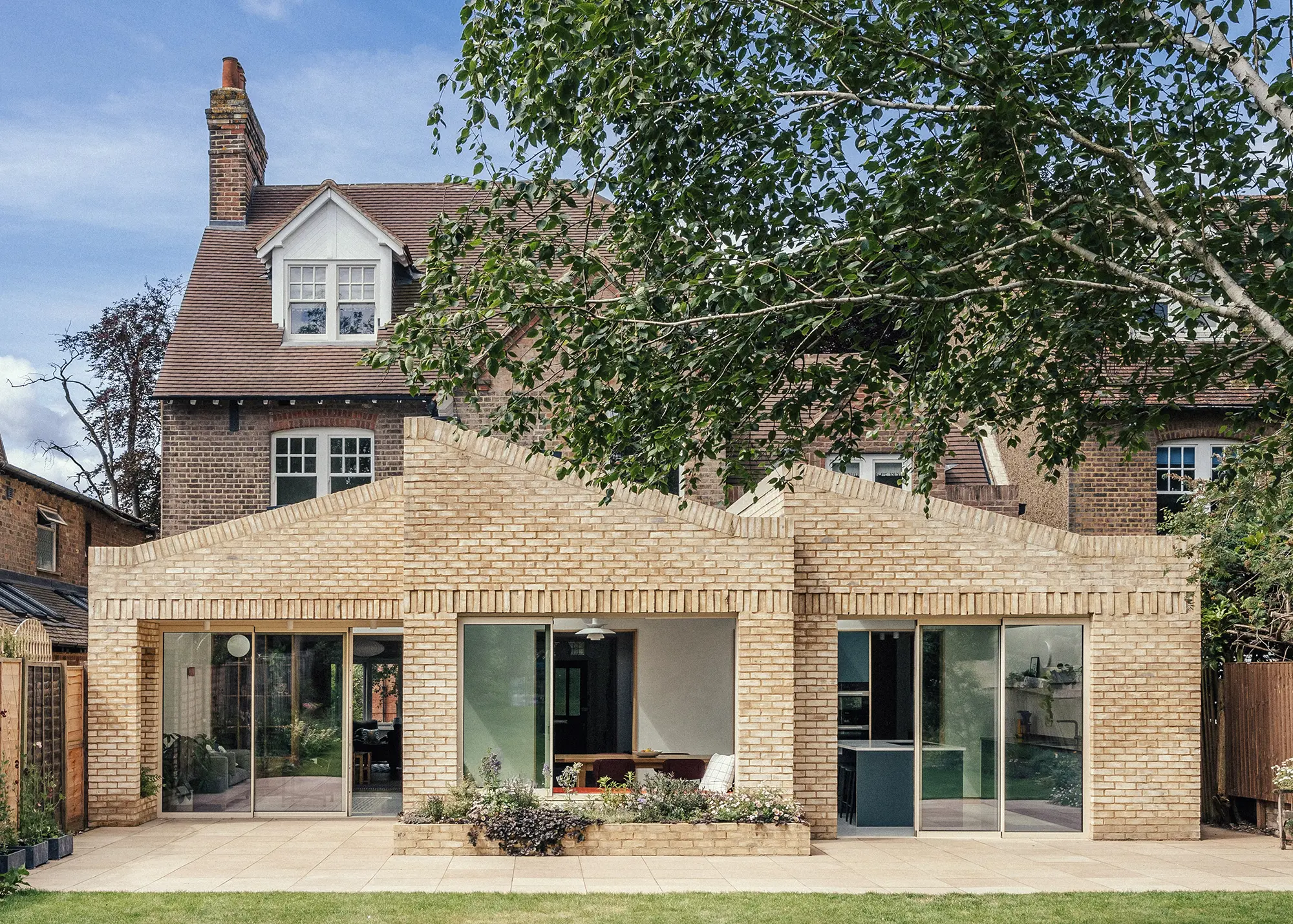
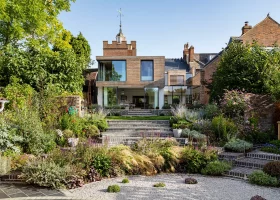
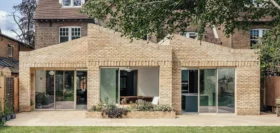
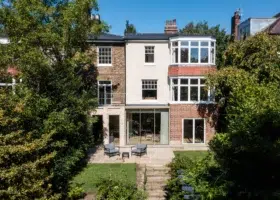
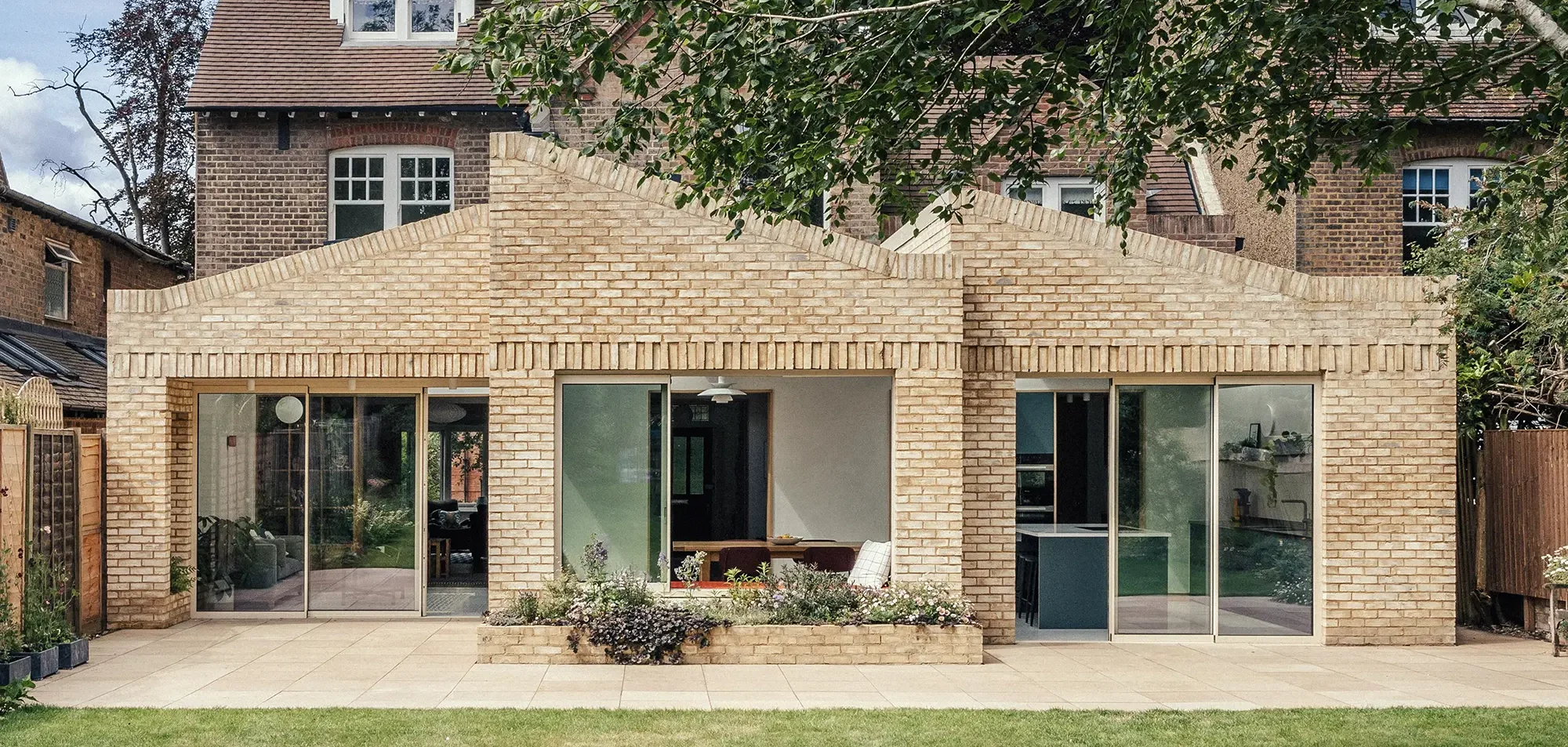
Emil Eve Architects transformed this Edwardian house set in the Harpenden conservation area with an eye-catching brick extension that provides the owners with a new open kitchen, living and dining space. The structure has been finished with Danish handmade waterstruck bricks from Petersen Tegl, and features aluminum glazing from IDSystems. Photo: Taran Wilkhu
Once you’ve looked at the original layout and your needs, you can shape a budget and work out how much a house extension costs (more on this below). It’s then a case of choosing a type of extension that meets your criteria and needs.
Extending to the back of the house is very common. This could be a simple single-storey addition, a side return (which utilises the strip of space typically found at the side of Victorian terraced homes) or a combination of both to form a wraparound design. Depending on the type of house, there’s also the option of building a double-storey extension to the rear or side of your property.
If you don’t want to eat into garden space, consider building up to create a loft extension or down to form a basement extension. In some cases, you might want a smaller addition like a new front porch extension. Alternatively, your house may have a garage that could be converted and/or extended over to create additional upstairs space. And a bungalow can be extended into a two-storey home by building up. Remember, the most suitable option for one house might not be the best for your home and what you need – if in doubt, talk to an architect about the different options.
What can you build under permitted development?
One key question you need to ask yourself when setting out on an extension project is whether you’ll be able to complete the addition under permitted development (PD), or whether you need formal planning permission.
Permitted development can allow you to build an extension – as long as it meets certain criteria and size limits – without the need to apply for formal planning permission. These are national, government-level guidelines as opposed to local authority guidelines, which differ considerably between each other.
Generally speaking, PD covers rear extensions, two-storey extensions, side extensions, loft and garage conversions, some front porch extensions. It also applies to things like changes to windows, cladding and render, size of patios and gardens etc. “Nine times out of 10, you want more from an extension than what PD will allow you to do,” says James Henderson from Fraher. “For very simple projects, PD can be great, as it’s faster and cheaper. However, for the more complex projects, it’s almost always going to require formal planning permission.”
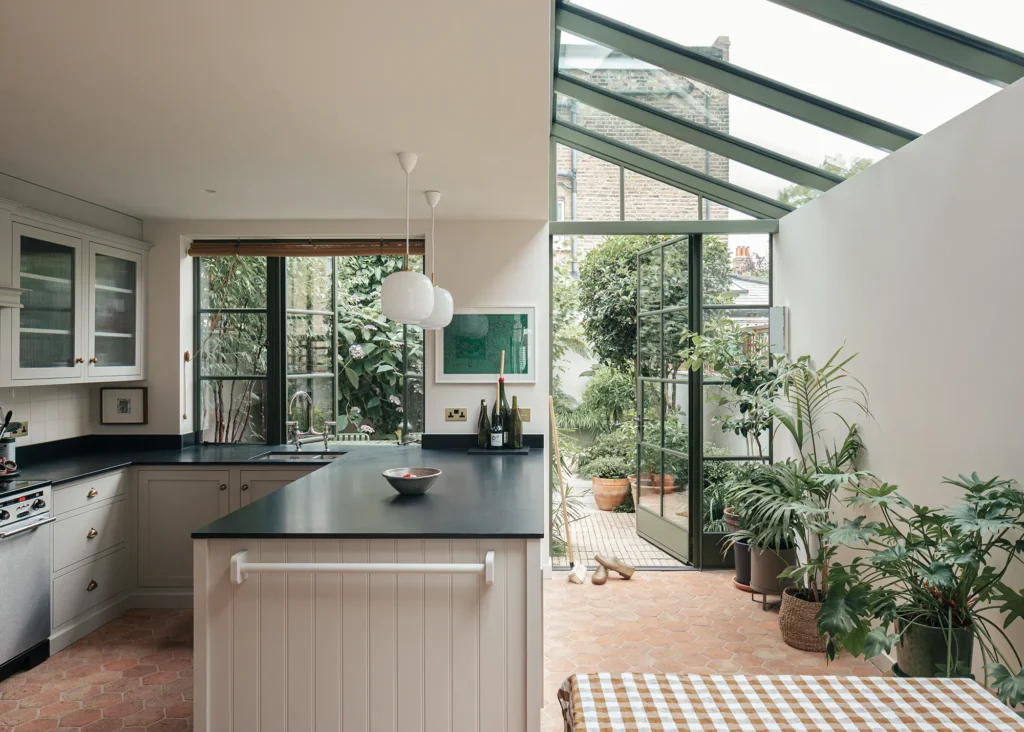
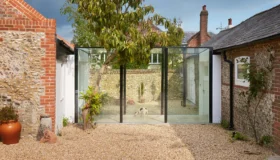
The owners of this period property were keen to restore the vintage feel. Fraher designed a side return extension to resemble a Victorian glass house, flooding the space with natural light. Photo: Chris Wharton
Whether your house extension falls under PD or not, it’s important to refer to your local authority’s planning guidance to make sure you’re adhering to the rules that apply to your project and the area in which it’s located. For example, tighter restrictions apply to work being undertaken on houses in protected areas. Different rules also apply to listed properties, for which you’ll also need to secure listed building consent to make any alterations.
Permitted Development (PD) rules for extensions
As stated by the Planning Portal, this is what you can do under permitted development:
- You can build up to 8m out from the rear of a detached house in England, or 4m in Scotland and Wales.
- Only half the area of land around the existing house can be covered by an extension.
- Extensions cannot be higher than the highest part of the home’s existing roofline.
- Where the extension is within two metres of the plot’s boundary, the height at the eaves cannot exceed 3 metres.
- Extensions cannot be built forward of the home’s main elevation or where it fronts a highway.
Permitted development doesn’t include additions such as verandas, balconies, TV aerials, chimneys or alternations to the existing home’s roof. If you do build an extension under PD, they you may wish to obtain a Lawful Development Certificate, which proves that all the work you’ve done meets planning regulations. This is particularly helpful if you ever plan to sell your home down the line.
When do you need formal planning consent for an extension?
If you want a large addition or to make a design statement, you might find the parameters of permitted development fairly limiting. Any innovative details or standout cladding materials that differ to the existing property are likely to require formal consent.
If you decide to go down the formal planning route, the first step is to develop a set of drawings. Working with a design professional (keep reading for more) typically yields the best chance of success, as they’ll have the skills to create a scheme that realises your property’s full potential. If you need to carry out additional appraisals, such as flood risk assessments, ecological surveys etc, this is the time to appoint the relevant external consultants.
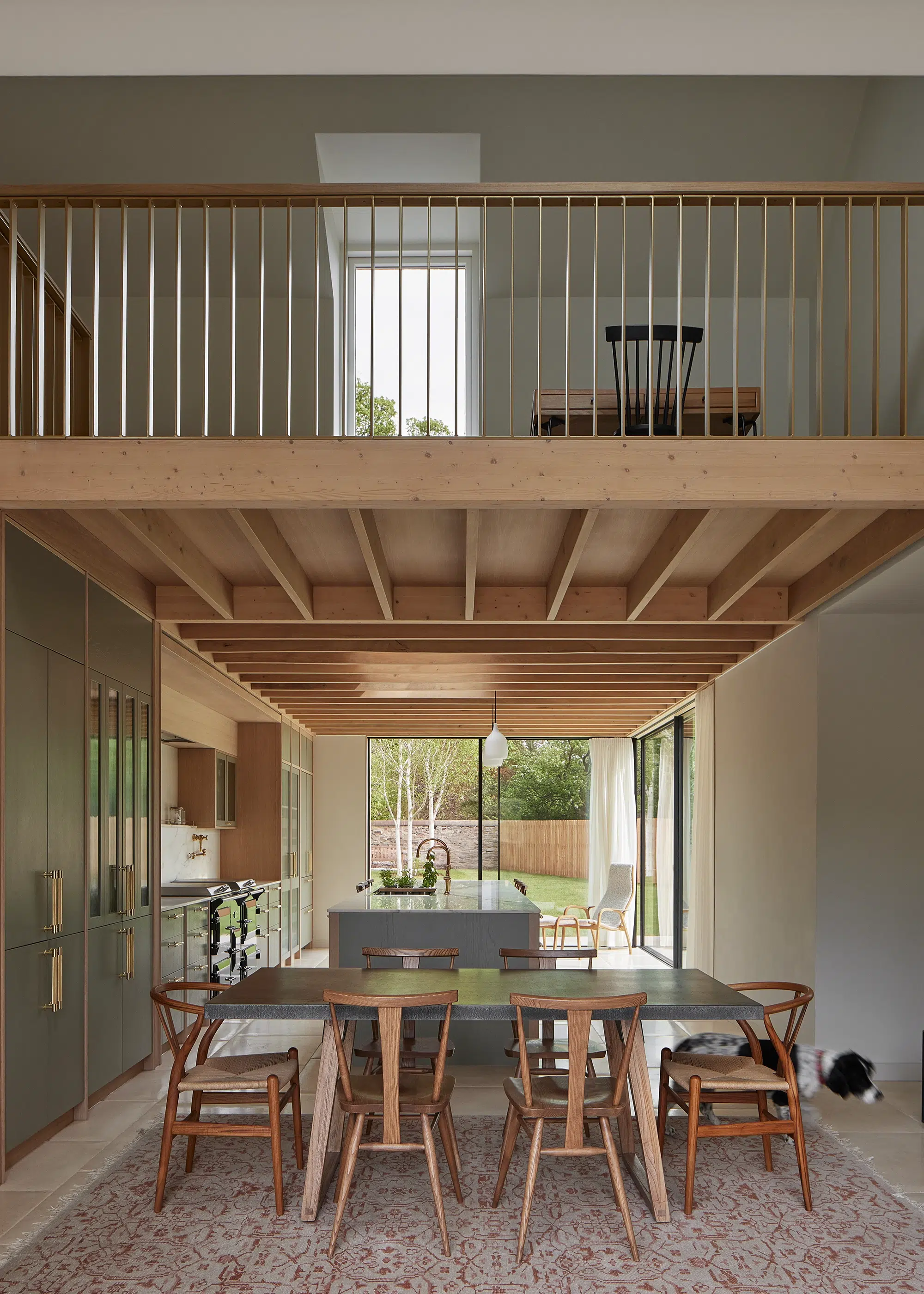
Konishi Gaffney Architects transformed this detached Victorian villa in Morningside, Edinburgh, into a light-filled, family-focused home. The project converted the former maid’s quarters into a double-height kitchen, dining and living space, with a mezzanine study above and extended eastwards to accommodate a generous kitchen. Photo: Nanne Springer
If your scheme is sensitive – for example, if you live in a listed property or a location with a specially designated status – going through the pre-application process could be beneficial. Though it can add a few weeks to your project schedule, it’s a chance to get early feedback on your house extension’s design and help identify any potential issues that may impede your scheme.
Once you have planning permission for your extension, it can be tempting to get building right away – but it’s important to check whether any pre-commencement conditions need to be discharged first. Ascertain if any documentation is required, such as a Party Wall Award, or a build-over agreement for development close to a mains sewer. You may also need Building Regs approval (keep reading to find out more). Finessing the construction details now can also save time and money on site.
How much does it cost to make a planning application?
When do you need a party wall agreement?
If you’re planning to work on walls that you share with neighbouring properties, or building close to an adjacent boundary, you’ll need to make sure you comply with the Party Wall Act. This legislation aims to prevent and resolve disputes. This means letting your neighbours know of your intention to extend, and how the work will be done. A party wall surveyor may need to resolve any disagreements and set parameters to protect neighbours’ property.
What does a party wall agreement look like?
You should serve a Party Wall Notice to your neighbours between two months and a year before building work commences. You can serve the notice yourself following specific requirements, or appoint a surveyor to do this. You’ll need to include drawings and details of the works. I’d also advise undertaking a photographic condition survey of your neighbour’s home. This will help to avoid any uncertainty, for example, about whether a crack was there before or whether it’s a result of your renovation works.

Emma Perkin is director at Emil Eve Architects, an award-winning studio based in East London. Established in 2009, Emil Eve creates imaginative and inspiring buildings and spaces.
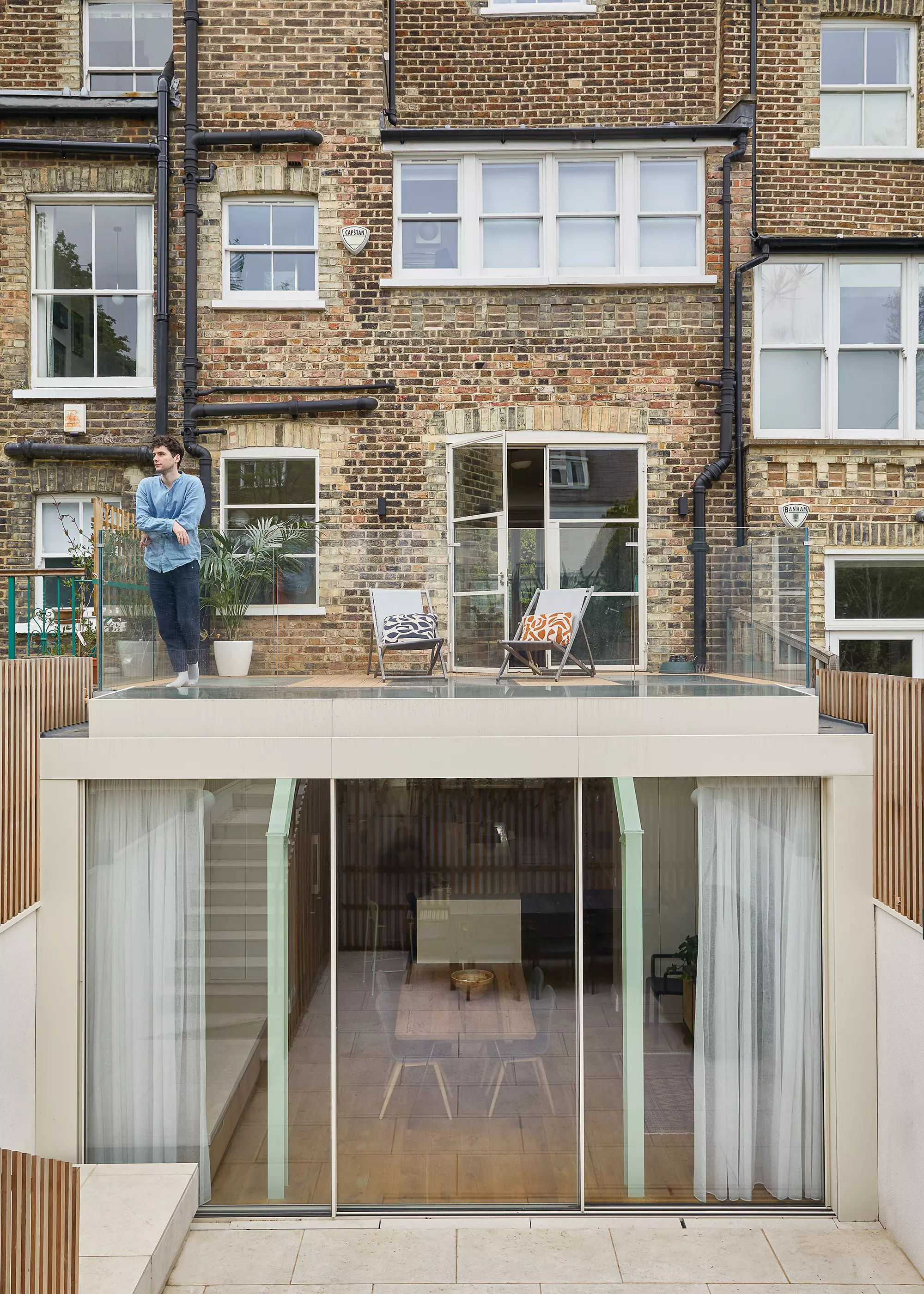
This townhouse already had a lower ground floor and loft extension. The new owners wanted to modernise the property – without applying for planning or Party Wall awards. Working within these constraints, Paul Archer Design developed a proposal to revolutionise the house, which involved rebuilding the existing the extension. This project cost £2,400 per m². Photo: Helen Cathcart
Premium Content
Downloadable E-Guide
Enjoying this article? Build It’s house extension downloadable e-guide will help you plan, design and construct an addition that enhances your existing property while meeting your needs and budget.
find out more
Building Regulations for extensions
Even if planning consent is not needed, the work must still comply with Building Regulations. You can either send your local council a full plan submission (best for high-value schemes), which the authority will then check against the current guidelines, or a building notice of your intent to start. Building notices tend to be for smaller projects (extensions, garages, loft conversions, etc). The work will be inspected at key stages.
For safety of the public and people using the building, Building Regulations will check the following factors:
- Foundations
- Damp-proofing
- Structural issues
- Insulation
- Ventilation
- Heating
- Sanitation
- Accessibility
- Fire protection and means of escape
How will your existing home impact your extension’s design?
Having outlined your objectives, it’s important to assess the design opportunities and constraints specific to your property. The goal is to create new spaces that seamlessly integrate with your existing home. Consider matching window depth, ceiling heights and roof angles to create continuity between old and new, ensuring materials and proportions complement the original architectural character.
Reconfiguring your existing spaces can enhance the flow of your whole home, without making them subservient to the new addition. Think about how key areas – such as the kitchen, living and dining rooms – can benefit from indoor-outdoor living, particularly in warmer seasons. Positioning high-activity zones away from bedrooms, studies and other quieter areas can further improve usability.
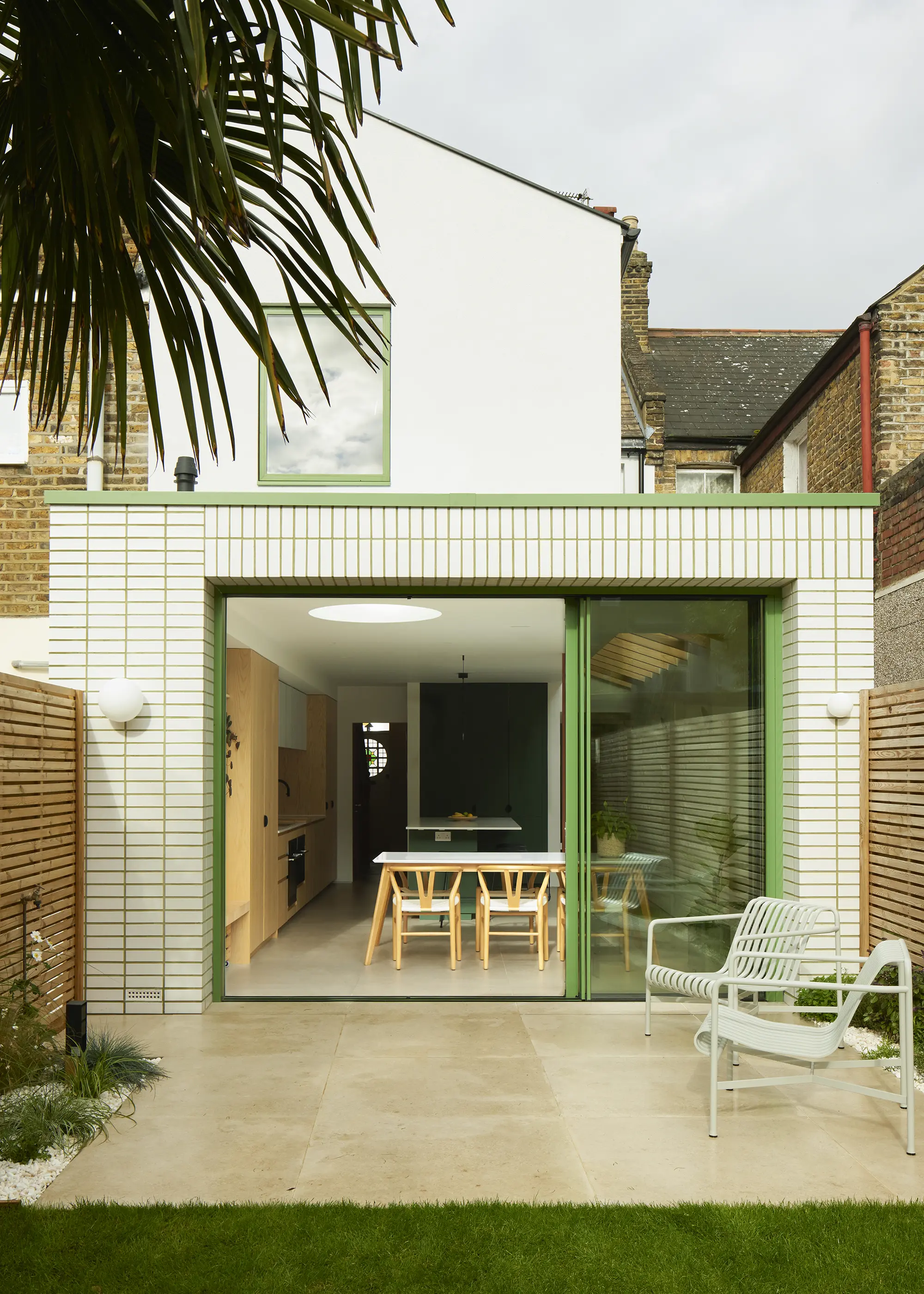
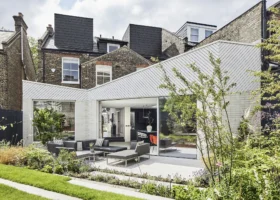
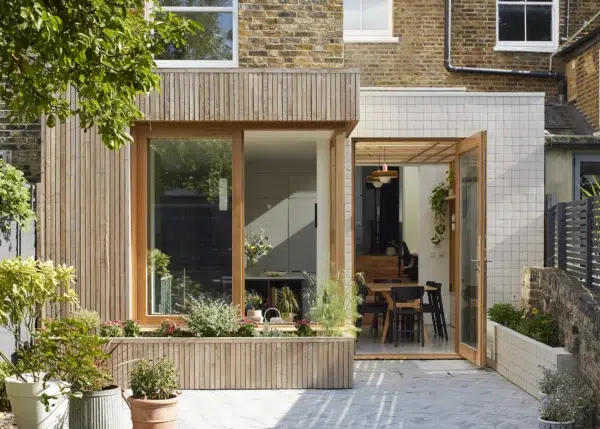
A unique blend of stacked white glazed bricks with green mortar characterises this wraparound house extension in Nunhead. Designed by Yard Architects, the project involved reconfiguring the house’s internal layout to create a new open-plan kitchen-diner, which makes use of a light, minimalist scheme and is connected to the garden via green-framed sliding doors. Photo: Richard Chivers
Orientation plays a significant role in determining how your extension interacts with natural light and seasonal temperature changes. “Orienting your home correctly can allow for passive heating in colder months but can also prevent overheating in the warmer months,” says Opinder Liddar, director at Lapd Architects.
Site access considerations might influence your choice of construction method. Properties in urban areas, for example, may have limited space for builders and materials on site, which might require careful coordination, phased deliveries, and off-site prefabricated construction methods. Similarly, homes with trees and animal habitats nearby may require specialist surveys to determine how close an extension can be built without disrupting the existing ecosystem. While self builders are exempt from Biodiversity Net Gain requirements, integrating features such as wildflower roofs or habitats can contribute to a more sustainable design.
Who can design your home extension?
Engaging a qualified architect is a great way to achieving a high-quality extension design, but there’s no legal obligation to use one. In fact, there are many professionals who can successfully draw your extension plans without the same level of qualification. The choice depends on what you want and what your budget is. So, who can design your extension? Popular house extension design routes include:
Architects
In the UK, an architect must undergo seven years of training and register with the Architects Registration Board (ARB) to use the protected title of architect. After this, they can also pay to become a chartered member of the Royal Institute of British Architects (RIBA). “An architect brings a different perspective to a design. They’re inclined to take a holistic approach, looking at the overall layout to ensure the building flows together as a whole,” says Caroline Shortt from Barc Architects.
Although an architect can offer great value for money, a full service may not be within everyone’s budget. “There are architects out there – and we’ve started to do it – that offer consultancy,” says James Henderson from Fraher. “This can consist of an hour-long call to feed your ideas to a design professional and give you some pointers on your plans.” A service like this can help you get a better idea of what you need, without putting as much of a dent in your finances as getting a fully-fledged design drawn up.
Architectural technologists
Architectural technologists combine a scientific approach with a practical mindset to deliver projects that balance high-quality design with functionality and performance. While architects will typically focus on light, space and sometimes more conceptual features – technologists generally hone in on the practical elements of constructing a home.
You can engage an architectural technologist to design and deliver your entire project, or you may opt for an architect to develop your initial concept, before engaging a technologist to take this forward to completion. Some designers are accredited under the Chartered Institute of Architectural Technologists (CIAT), offering guidance to professionals and quality assurance to clients.
Architectural designers
Architectural designers can also provide drawings. Qualifications among this type of designer may vary – some may be architects in training, others are certified in areas like surveying, while some may have no formal training at all. So, it’s important to do your due diligence and look at their previous work to see if it aligns with your goals.
Design & build companies
Many contractors are set up to handle both the design and construction of your extension, streamlining the process and ensuring feasibility from the start while maintaining clear communication throughout.
DIY home extension
For smaller projects, home design software or online planning tools can help you sketch out initial ideas and explore layout possibilities before consulting a professional for key advice.
If you’ve already got a strong idea of what you want out of your extension, then draughtspeople can draw up technical plans for a builder to work from. “If you want a simple lean-to small side extension to add a couple of extra metres onto your kitchen, then potentially you could go to someone who can use computer-aided design (CAD) to put together drawings for you,” says Caroline. Bear in mind you may still need input from a structural engineer and other professionals.
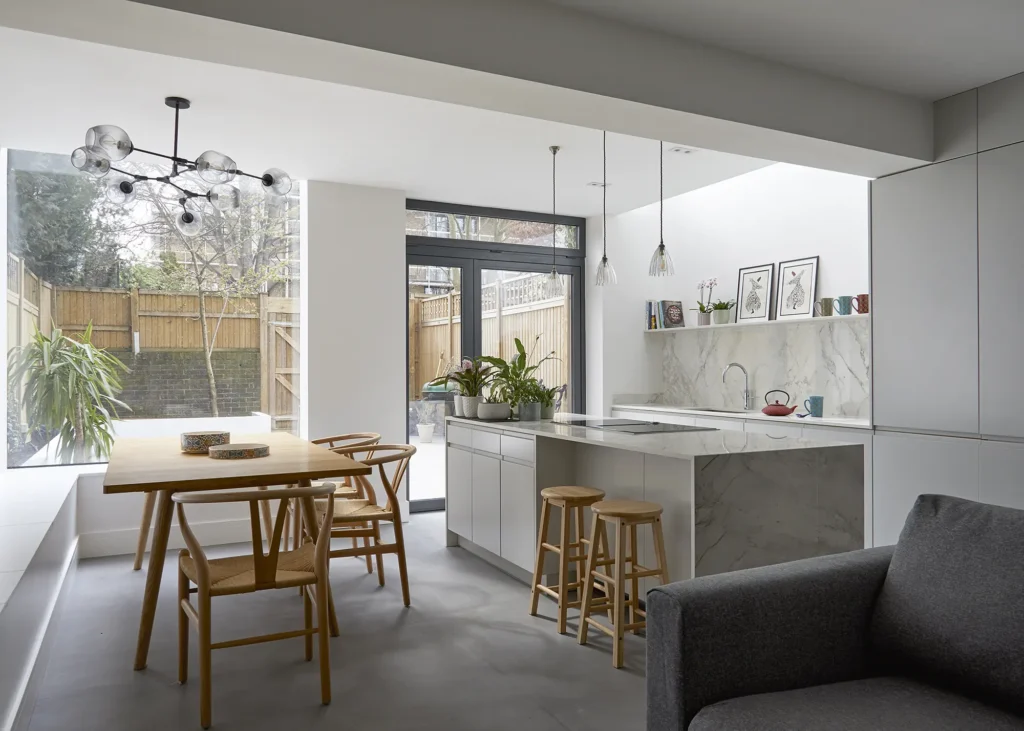
Build It readers Harry and Sara Montatt undertook a complete internal overhaul of this 1975 three-storey London terrace and extended it to create a space ideal for growing their young family. They engaged Lumin Architects to help them create a light-filled rear extension which now houses an open-plan kitchen-diner. The whole renovation and extension project cost the couple £1,642 per m². Photo: Anna Stathaki
“Research your designer before you appoint them and make sure they offer the kind of service you want,” says John Payne, director of Blackrock Architecture. “Look at the projects they’ve done to see if they’re aligned with the scale and style of extension you’re keen to achieve.”
Which heating system should you specify for your extension?
Taking on an extension is a great opportunity to consider the energy efficiency of both your existing home and the new addition, maximising the benefits of your project. There are various factors to consider – from insulation levels and the new space’s heat distribution and emitters, through to ventilation strategies. These choices will be key to how enjoyable your new space is to use. So, what are your options for heating your extended home effectively?
Insulating the existing home
The first and most important step is to carefully consider the thermal performance of both your extension and existing house. “Insulation is critical – the better a property retains heat, the less energy is required to maintain comfortable room temperatures,” says Chris Hayes, UK technical manager at Roth UK. Upgrading the original home’s insulation means you can minimise extra heating loads brought on by the extension and get the best value out of your setup.
UK Building Regulations set minimum standards for extensions, which, while slightly less stringent than those for new builds, still demand significant attention to detail. The required U-values (which measure thermal performance, with lower values indicating better efficiency) are:
- Roofs: 0.15 W/m²K
- Walls and floors: 0.18 W/m²K
- Windows and doors: 1.2 W/m²K
- Rooflights: 2.2 W/m²K
Specifying sustainable technology
For most modern boilers that are in good condition, accommodating a modest extension may be feasible without significant upgrades. However, older or underpowered systems might need replacing to efficiently heat the expanded footprint.
If you’re undertaking a whole-house renovation (or retrofit) alongside the extension, you may consider switching to a heat pump. Under the government’s Boiler Upgrade Scheme (BUS), homeowners can access grants of up to £7,500 towards the installation of a heat pump. These systems are best suited to super thermally efficient, highly insulated properties, offering potential savings on energy bills and a reduction in carbon emissions.
Bear in mind that, as a heat pump runs at a lower flow temperature compared to a gas boiler, it relies on larger emitters such as oversized radiators or underfloor heating. So, a full system design is needed to ensure best results.
Choosing heat emitters – radiators & UFH
Water-based underfloor heating (UFH) systems are increasingly popular in extensions because they provide consistent warmth while freeing up wall space. UFH uses water heated to around 35°C, compared with radiators that require 60°C, often making it more cost-effective and efficient in open-plan spaces. It also works well with renewable heating systems such as heat pumps, helping you reduce energy consumption.
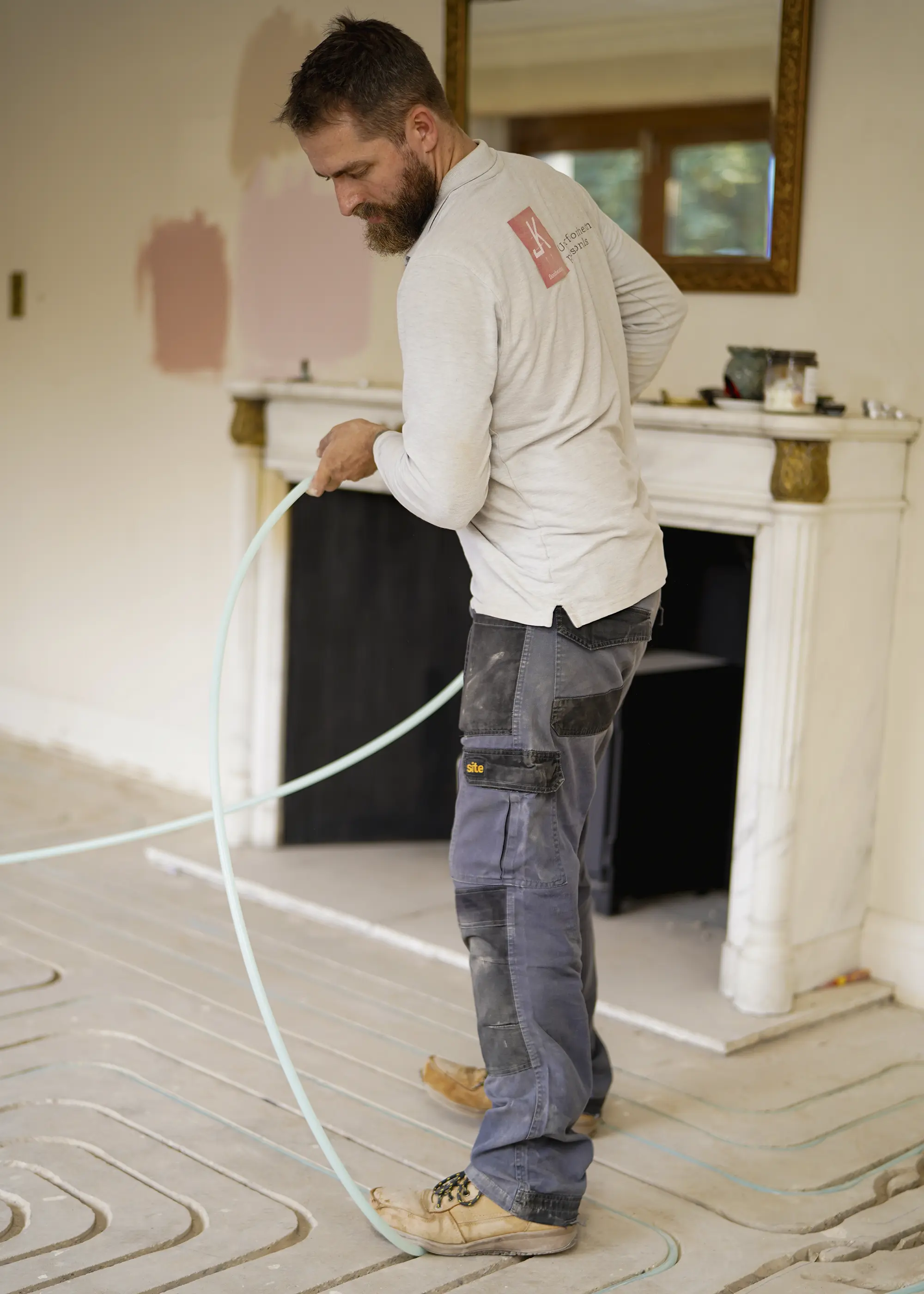
JK Floorheating systems are milled directly into your existing floor surface, reducing the need for additional insulation and therefore your retrofit underfloor heating costs down
“As soon as you select the designer for your extension, start talking about underfloor heating so they can plan it into the design of your build, says Chris. “Costly compromises will occur if you plan to include an UFH system too late.” Early planning avoids disruptive retrofits and ensures the system integrates seamlessly.
For extensions involving ground floor reconfigurations, a low-profile retrofit UFH system can deliver uniform heating while minimising floor build-up. Alternatively, for smaller projects, keeping existing radiators may be more practical. In bedrooms or bathrooms, where quick temperature changes are needed, traditional radiators or electric UFH systems can be effective.
“People often want to place the manifold in the corner of a house, but since every UFH pipe has to connect to it, choosing a more central location will result in a more efficient system,” says Chris. A central spot ensures even water distribution and consistent heating throughout, reducing cold spots and improving system performance.
Specifying a stove or fireplace for an extension
|
|
Michael CokeMichael Coke is the biomass & electrical development manager for Stovax Heating Group. Mike has 15+ years’ experience in biomass and renewable heating systems, developing high-efficiency stoves and fires. He also chairs the residential solid fuel appliances committee at the British Standards Institute. |

The benefits A stove can be a highly valuable addition to a home extension, offering both functional and aesthetic benefits. A stove can create a natural focal point while enhancing comfort and adding character to what is often a large, open-plan space. It can also boost energy efficiency by providing localised heating, reducing reliance on central heating and creating a cosy space year‑round.
Function When planning, it’s important to determine whether the stove will service as the main heat source, support an existing system such as a heat pump, or act primarily an atmospheric feature. This decision will guide choices around size, heat output, fuel type and the overall design of the space.
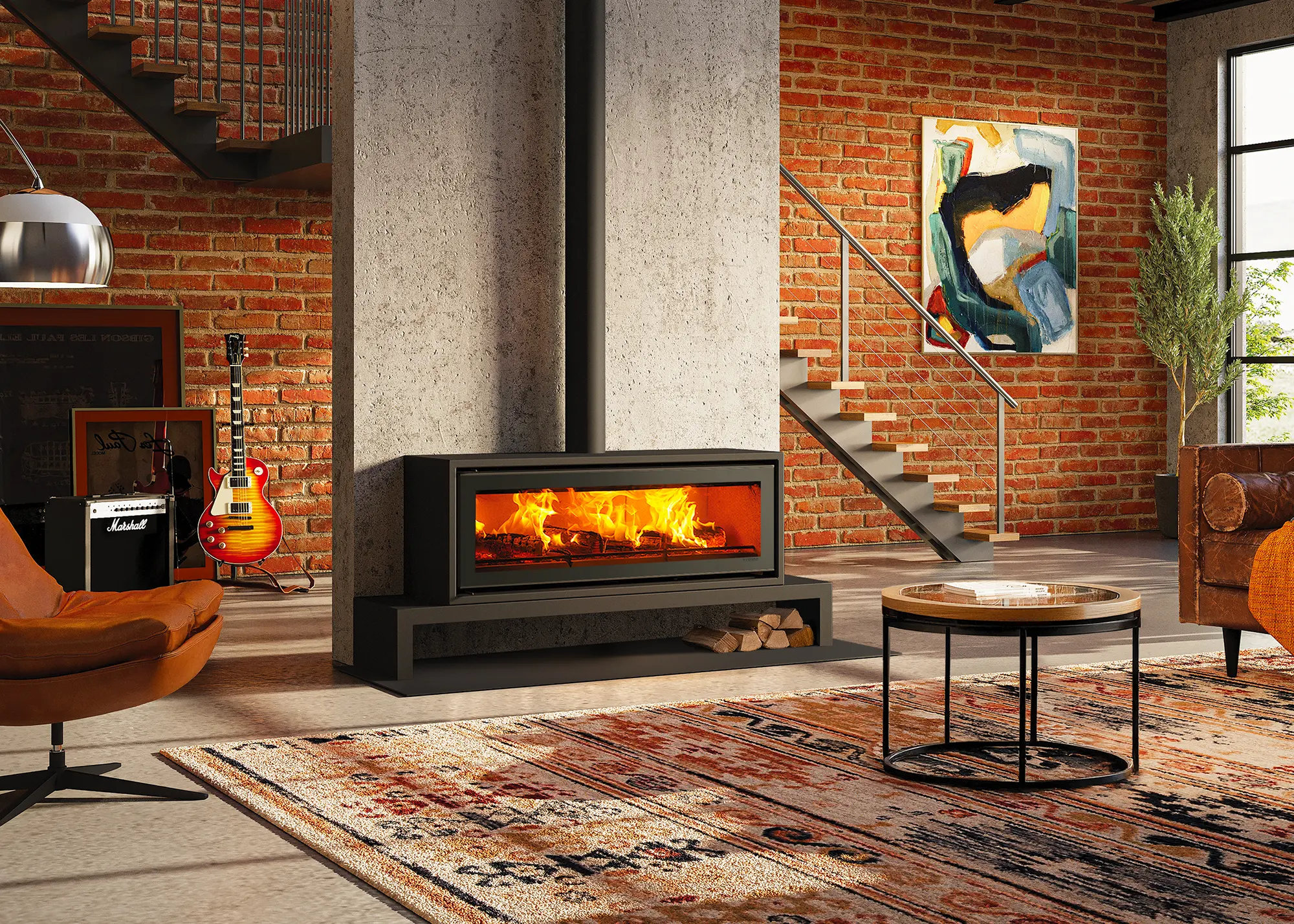
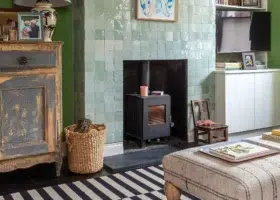
Stovax’s Studio 3 freestanding woodburner
Type of fuel Woodburning stoves offer traditional charm and high heat output, and make a fitting choice for those who love the ritual of a real fire. Gas stoves provide a similar living flame experience, but with instant control and consistent heat at the touch of a button. For maximum flexibility, electric fires offer the simplest installation and minimal maintenance.
Ventilation is a key consideration. Woodburning and gas stoves require appropriate flue systems and must comply with building regulations to ensure the safe removal of combustion gases. Adequate airflow is also essential – particularly in highly insulated extensions – to prevent negative pressure issues.
Location When choosing a location for the stove, aim to position it where it can be enjoyed from multiple areas. Ensure there is enough clearance from combustible materials, that is compliant with building regulations and consider how furniture layouts will interact with the heat source. If no chimney is present, a prefabricated flue system may be used for wood or gas stoves. Many gas models are also available as balanced‑flue versions, which do not require a chimney at all. Electric fires, meanwhile, need only a standard mains connection.
How to calculate your house extension budget
How much you should spend on your house extension will vary substantially from project to project. It all depends on what you’re trying to achieve with your extension, as well as the existing house. “It’s very rare that the work is just to the extension,” says Caroline. “This kind of project will usually involve some alterations to bring the existing house up to par, because when you’ve got a nice, shiny addition, the rest of the space might start to look a bit drab.”
When devising an extension budget and calculating how much your extension will cost, it’s important to be as clear as possible in the brief to your designer, in order to determine what building work is going to be involved. “Adjust the size of your extension to meet your budget rather than the other way round,” says Caroline.
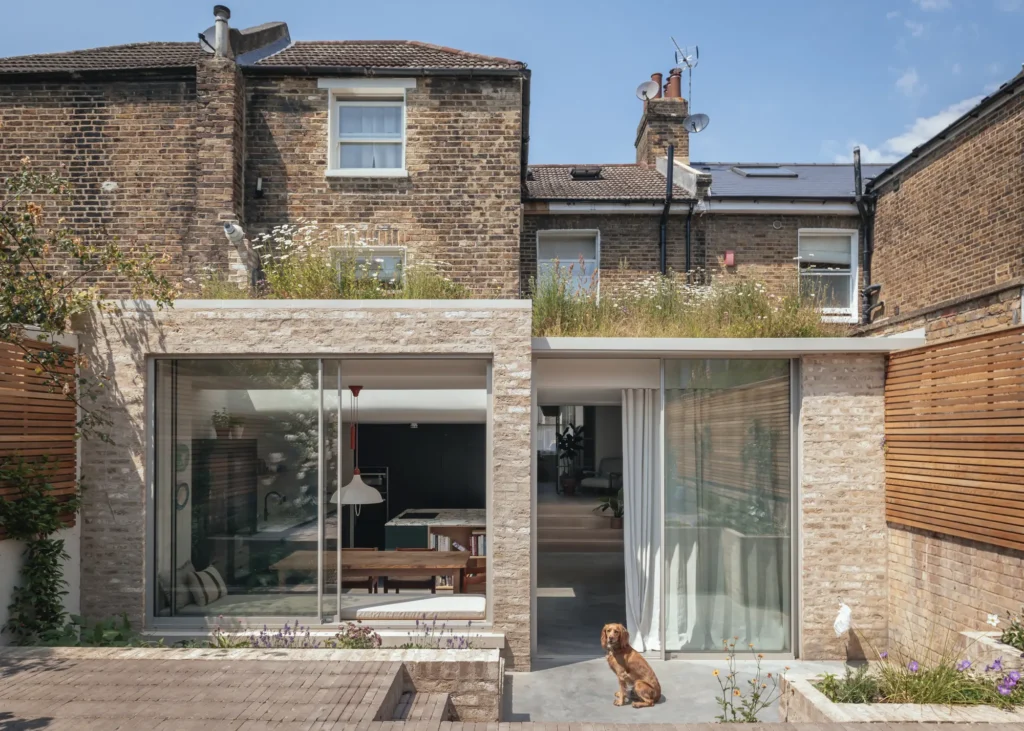
Oliver Leech Architects have transformed this Victorian house, set within a conservation area in Herne Hill. The sensitive redesign involved replacing a network of small, disconnected rooms with a stepped extension containing a social, open-plan kitchen-living-dining area. The exterior comprises Con Mosso bricks, covered in a lime slurry to achieve a soft, stone-like textured finish. Photo: Jim Stephenson
The age of the property could also reveal further improvements that need to be made, such as electrics and plumbing. You may also choose to upgrade your main home’s insulation to meet modern living standards if you’re extending a period property. “Look to put your money into improving the fabric of your existing property. Any funds leftover can then go towards an extension,” adds Caroline.
| Want to learn more about extensions?
Head to Build It Live and visit our dedicated extensions clinic for some one-to-one advice from the professionals! Build It Live takes place three times a year in Kent, Malvern and Exeter. The next show will be on 26th and 27th February 2027 in Maidstone, Kent. Claim a pair of free tickets today and start planning your visit. |
How much does an extension cost to build?
Anyone looking to extend their home will question ‘how much does an extension cost?‘ and the result will vary significantly on a case-by-case basis. We have developed a series of benchmark costings for extensions, based on a main contractor build route. This is how much your house extension could cost per m²:
Single-storey extensions
In the UK, costs for a single-storey rear extension will typically sit between £1,800 and £3,000 per m². This could rise to around £2,500-£4,000 per m² in areas like London. These figures are based on creating a usable living space, but exclude the final decoration, fees, surveys and VAT. Here’s a typical cost breakdown for a mid-range, 30m² extension outside of London, assuming a total build cost of around £60,000.
| Element | % of Cost | Typical £/m² |
|---|---|---|
| Foundations & drainage | 12% | £200-£350 |
| Shell / superstructure | 50% | £1,800-£2,200 |
| Glazing & external doors | 15% | £300-£500 |
| Rooflights / lanterns | 5% | £50-£100 |
| Electrics & lighting | 8% | £150-£300 |
| Plumbing & heating | 7% | £130-£250 |
| Flooring | 3% | £50-£80 |
| Bathroom or WC | 2% | £40-£60 |
| Plastering & finishes | 10% | £200-£350 |
Side-return extensions
Usually built as single-storey structures, side-returns fall within similar price bands – but the compact footprint may add a small uplift. From £2,300 to £2,900 per m² for a standard spec.
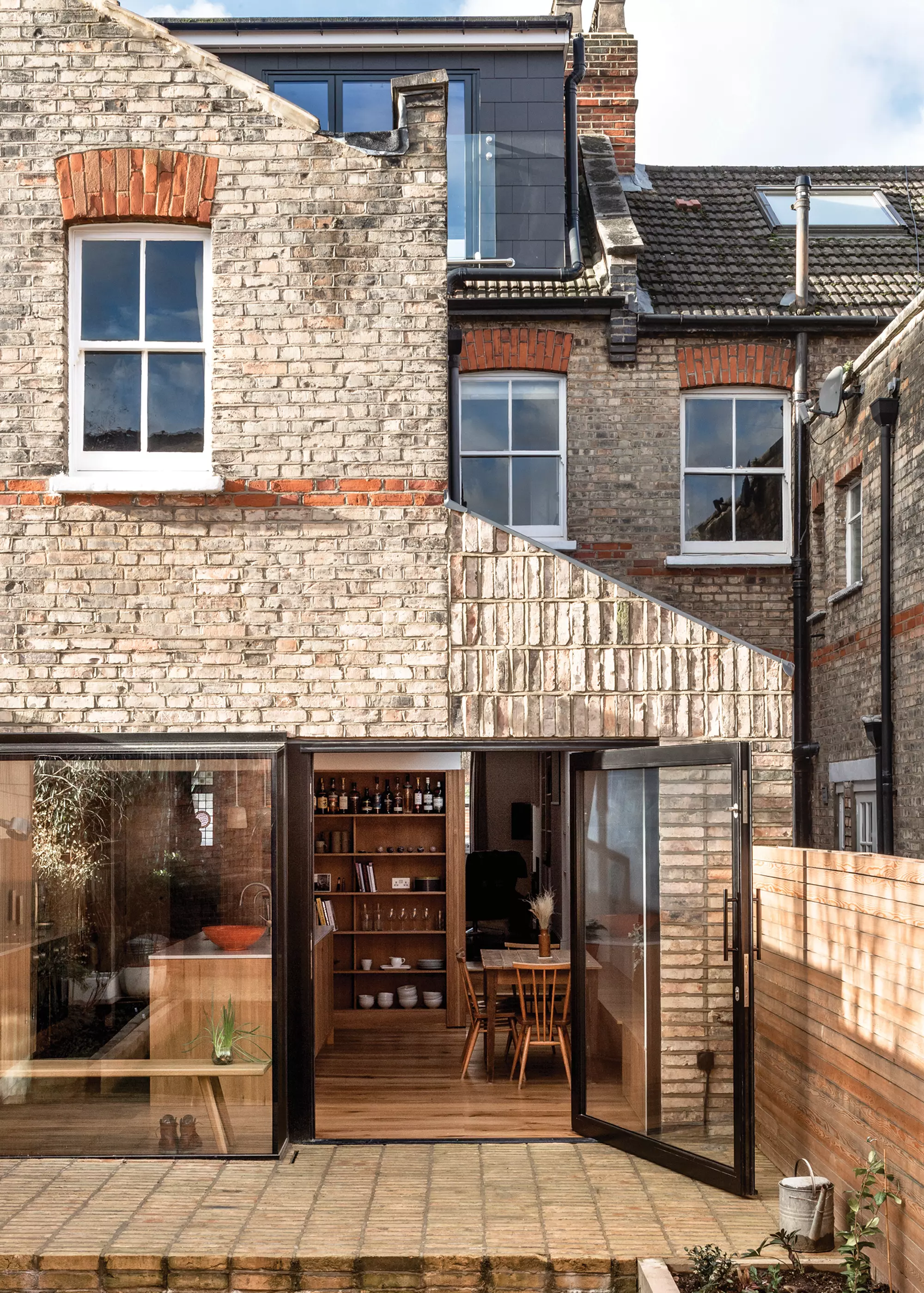
The large glazed pivot door in this side return extension by Bradley Van Der Straeten Architects is just one of the focal points bringing design flair to this home. Inside, a curved edge reaches up from the original ceiling to meet a large rooflight over the side addition, while playfully laid recycled bricks bring pattern and interest to the external elevation. Photo: French + Tye
Wraparound extensions
Construction costs per square metre are broadly similar to those for other types of single-storey extension, generally starting from around £2,100 to £2,700 per m², depending on specification.
Two-storey extensions
Because the same foundations and roof structure serve two levels, two-storey extensions can offer better value per square metre of space added, with prices typically starting at around £1,800 to £2,400 per m², rising to £2,600+ per m² for higher-quality finishes.
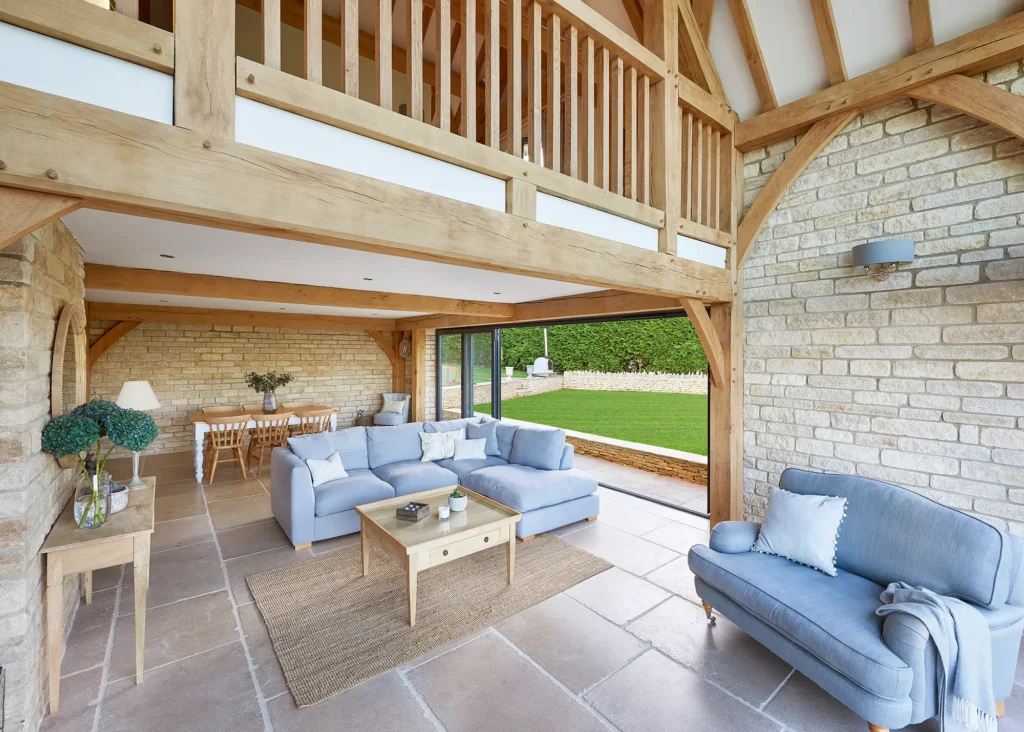
Oakwrights masterminded this two-storey extension, which holds a kitchen-dining-living area and master bedroom suite. The extension features a striking glazed gable and two sets of bifold doors that make for a fabulous, light-filled interior. The project cost a total of £195,000. Photo: Richard Kiely
Basements
Works to convert an existing basement might start from around £1,000 per m², while a full new basement extension typically begins at around £3,000 per m². These indicative figures are to waterproofed shell and floor screed only (so you’ll need to add fit-out costs on top). So, it’s a relatively expensive way to create new space – but in the right location, you’ll more than recoup the cost in added value.
Loft conversion
A straightforward rooflight conversion might start from around £1,800 per m²; with dormer loft conversions beginning at £2,000 per m². More complex alterations such as hip-to-gable or mansard extensions start at approximately £2,550 per m².
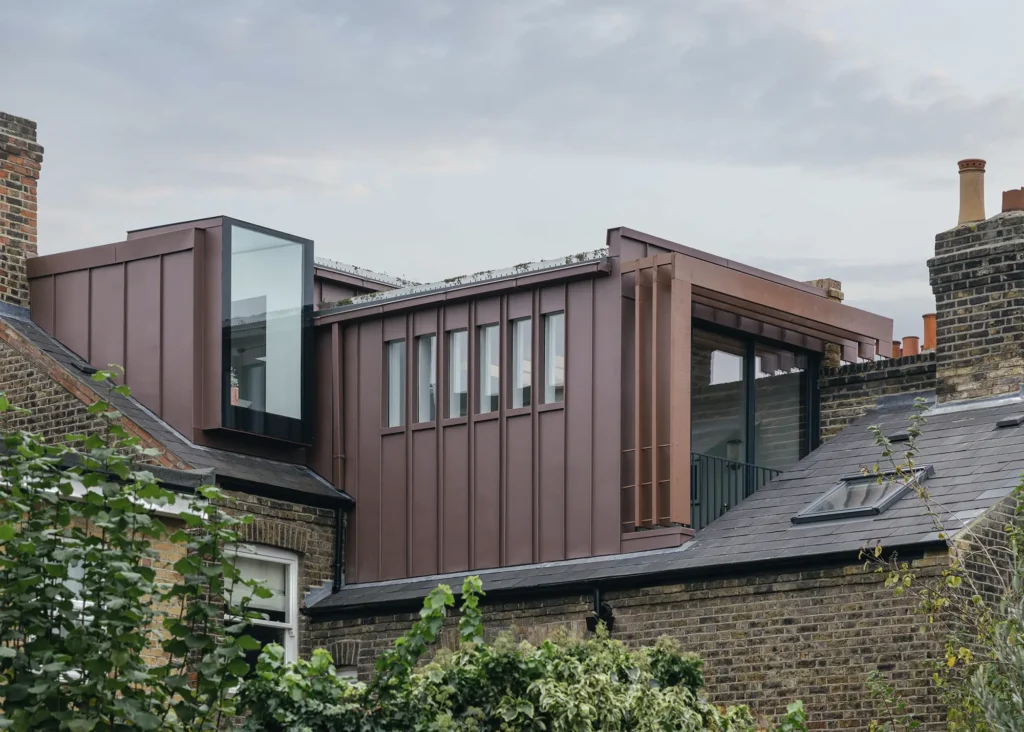
Fraher & Findlay architects were approached by a young client who was looking to transform their first floor flat and add more space at roof level. They created a scheme with the kitchen and dining spaces looking out over the rooftops with the bedrooms positioned underneath. The loft extension added 27m² of new living space and was completed on a budget of £260,000 (for the whole-flat renovation and loft extension). Photo: Chris Wharton
Who should project manage your extension project?
The building and project management route you choose for your extension project will impact costs. An average single-storey rear extension (outside of London) could cost around £2,400 per m² built using a main contractor. The different options could help you save on this overall cost.
Main contractor – standard option
The figures above in our extension costs section are based on a main contractor route, where a general building firm manages the project to completion on your behalf, using a standard contract. You can bring prices down by taking on more of the responsibility yourself. Below you can see typical indicative savings for other popular build routes.
Builder plus subcontractors – potential saving 10%
You could potentially reduce build costs by circa 10% by hiring a main contractor to complete the structure to watertight stage. At this point you take over from the main contractor as a project manager and the remaining work is undertaken by subcontractors (individual trades), whom you manage through to project completion.
Self project managed – potential saving 20%
By project managing the entire extension yourself, including the main structural phase, you could knock up to 20% off total build costs. This route doesn’t involve undertaking any construction works yourself, but rather fully managing the subcontractors on a DIY basis. So you are both client and building contractor, hiring trades and supplying plant, machinery, tools and most of the materials.
DIY extension – potential saving 25%
Many will ask themselves ‘can I build my own extension?’ and the answer is yes. Undertaking a large proportion of the build on a DIY basis could enable you to reduce project costs by as much as 25%. This route assumes you’ll use trades for the key structural and infrastructure works, but will carry out much of the second fix tasks, landscaping, general labouring, decorating, tiling etc yourself. You will also be project manager, buying most of the materials and supplying all tools, plant, scaffold etc.
Who should build your house extension?
Many design professionals will have a network of trusted contractors and can put your project out to tender. “We always try to matchmake the builders we work with to our clients and their projects,” says James. “We don’t do an open or competitive tender. Instead, we introduce the contractor to the homeowner and negotiate on their behalf to find the right price for the project.”
In many cases your designer may also offer contract administration to oversee the construction phase, ensuring the extension is built according to design and to a high-quality standard. Alternatively, you might ask them to provide ad hoc advice during the work and check in at the end of the project to help identify any snagging issues.
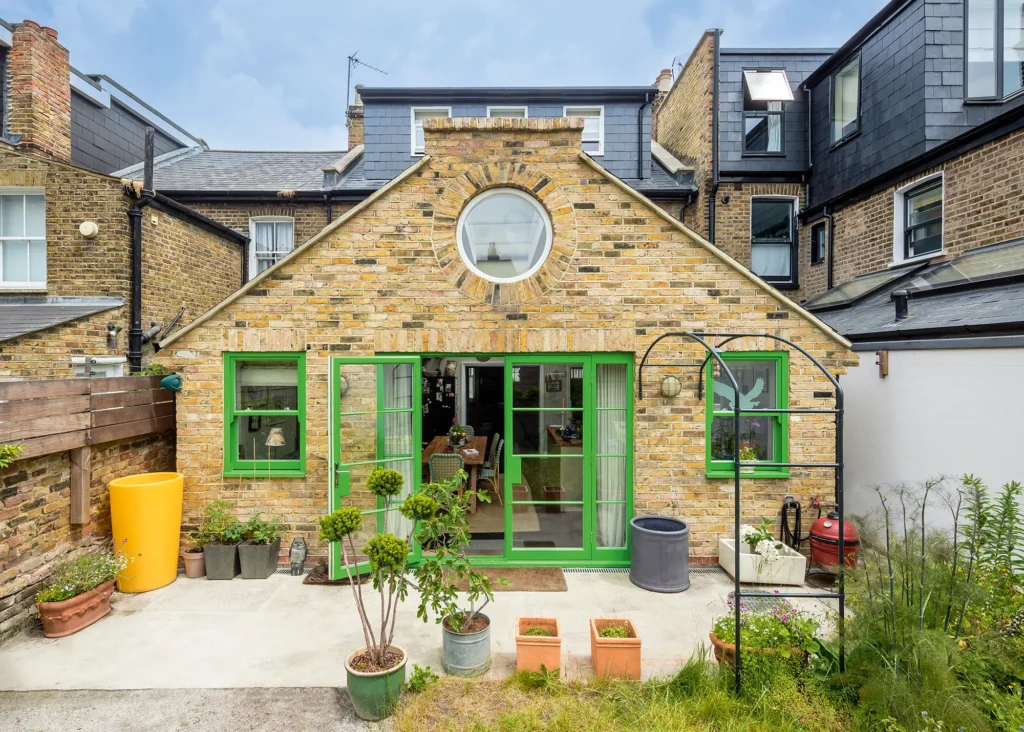
Alice Constable Maxwell‘s home has been upgraded with a dormer loft conversion and a light-filled rear kitchen-diner extension with colourful glazed features and a charming interior scheme. The project came in at £1,916 per m² for the full renovation and extension works. Photo: Simon Maxwell
The key is to know exactly what you’re getting as part of their service. “Some designers will only offer drawings, but some, such as ourselves, stay with the client throughout the project from beginning to end,” says John at Blackrock Architecture.
If you opt for a designer to produce solely the technical plans for your extension, you’ll need to do your own thorough research to find a good builder. “Look up their firm on Companies House – have they got cash in the bank or are they likely to go bust?” says James.
Word of mouth is often an effective way to find someone reliable, particularly from neighbours, as the builder will have experience with your type of house and area. “Get a contractor who’s worked on a similar type of project before, as they’ll know what to expect and be more accurate with their costings,” says Caroline.
Avoid these extension mistakes
Avoid confusion when requesting extension quotes
You can avoid confusion by supplying prospective contractors with detailed architectural drawings or quantity surveyors’ plans to work from. Then you can compare like-for-like quotes and ensure nothing has been missed out. If the details shared with each contractor vary or change, then the quotes and prices likely will too. And remember, cheapest is very rarely the best choice!
Research your contractors before you agree to work with them
Check for membership to the Federation of Master Builders (FMB) where trades must pass a vetting and independent inspection process before joining. Ask to visit other extension projects to ensure their work is up to a high standard, too.
Pay attention to communications
Be wary of contractors who are not forthcoming with key information or are slow in responding to simple requests. A trustworthy contractor will always be open to communication with you. You should reciprocate by communicating openly and regularly with your builder, too.
Project managing with limited experience
One of the biggest mistakes to avoid is trying to project manage yourself if you’re inexperienced. Instead, use a main contractor to manage all the tradespeople involved. Don’t try to cut corners or save money by project managing things yourself if you don’t have the knowledge and time. This will expose you to unnecessary financial and liability risk, not to mention additional stress.
Paying too much upfront
Be wary of paying too much money upfront. Sign a contract for staged payments with your builder and aim to put down no more than a 10% deposit at the outset of the extension project.
Do you need home extension insurance?
Many homeowners mistakenly believe that their builder’s insurance or standard home insurance policy will cover the risks of a house extension. Unfortunately, this is often not the case. “These policies typically won’t offer the right kind of cover for an extension,” says Harry Connor, head of sales at BuildStore Insurance Services. “It’s important to have the correct protection in place to safeguard yourself and your property – plus the construction works and on site tools or machinery.”
Standard home insurance policies are typically geared towards protecting a finished home and may not extend coverage to new works or unoccupied properties. Even if your provider agrees to add on extension cover, many elements such as theft of materials or equipment, or damage caused during construction, is likely be excluded. A comprehensive extension insurance policy is the best way to protect your investment, yourself and your home if unexpected issues arise during your project.
What’s covered in a home extension insurance policy?
A specialised house extension insurance policy is specifically designed to cover the unique risks you will face when carrying out a project.
- The Existing property and the extension work will be covered up to the reinstatement value stated in your policy. Employers’ and public liability insurance is included to protect anyone working on site, including family and friends, and their property. It covers third-party injuries or property damage.
- Cover for unoccupied homes isn’t usually included under your standard home insurance, but a tailored extension policy provides protection both before and during the construction phase.
- Legal expenses should be covered and your provider may also offer advice and support in the case of disputes – helping you to avoid costly legal battles.
How much does extension insurance cost?
The cost of a house extension insurance policy varies depending on several factors, including the size of the project, location (ie mining area, flood zones), whether your existing building is listed or in a conservation area and if you need party wall agreements.
“A typical 12-month policy might cost between £750 and £2,000,” says Harry from BuildStore. For smaller projects, six months of coverage may be more suitable. “On a £200,000 house with an extension budget of £100,000, you might pay around £480 for six months of cover,” says Simon Middleton, managing director at Protek Group. You should consider this cost as part of your overall project budget.
find insurance providers in Build It’s directory
Do you need structural warranty for a home extension?
While it’s not a legal requirement, a structural warranty is a valuable addition to a house extension project – offering long term protection against potential construction defects. This kind of cover can be particularly useful for large extensions, providing added peace of mind for sizeable investments. Issues with the foundations, walls, roofing, or other structural elements that could compromise the integrity of the extension would be covered.
“As the developer of the works, you remain liable under the Defective Premises Act for those works and a structural warranty helps risk manage that exposure,” says Simon from Protek Group. It can also be important if you plan to finance the project or sell the property in the future, as lenders often require this type of coverage before approving loans. Additionally, warranty providers will inspect the works before providing cover to ensure they are being built to standard, which offers another layer of assurance.
Home extension FAQs

Simon Graham is director at Yard Architects. Simon founded Yard Architects in 2014, having gained extensive experience leading award-winning residential developments at previous practices across London.
How easy is it to get consent for an extension to a listed building?
Listed building consent (LBC) covers an entire building, its interior and its surroundings, so most work on a listed building requires listed building consent. For homes that aren’t listed, you don’t need planning permission to change the internal layout or add a bathroom. However, with a listed building, even moving an internal door requires consent. Repairs don’t usually require consent, as long as they are completed using the same materials as the existing feature.
The application process for LBC is similar to a regular planning application, but it can require a lot more information to be submitted, including very detailed drawings. We find some conservation officers are more open to changes to a listed building than others, so it can be a bit of a lottery in terms of how many changes you can actually make.
Can my neighbours reject my extension plans?
Neighbours can’t reject your extension plans, only the planning officer can do that, but they can object if they think they are going to lose daylight or privacy, or they don’t like the extension’s design, for example. It’s wise to speak to your neighbours before you make a planning application for an extension. Show them your extension plans, design ideas, listen to any concerns they may have and try and address these before you make a submission.
Opening a clear line of communication will usually prevent neighbours making objections when you make your submission, meaning you are more likely to gain approval smoothly. Objections are weighed up by the planning officer and an objection doesn’t automatically lead to refusal, if the officer doesn’t think the objection is valid.
Do I need to pay a Community Infrastructure Levy (CIL) on a house extension?
You don’t have to pay CIL unless you are building a very large extension of over 100m². If you are rebuilding a house, then the rules are different, and you may have to pay CIL if the floor area is increased or if there is any change of use in a conversion. There are exemptions for self builders, though. The Planning Portal gives more information on CIL and when it might be applicable.
What hidden costs should I be aware of when undertaking a home extension?
Discovering structural defects you weren’t aware of can impact costs. Existing shallow foundations which need underpinning, asbestos, and dry rot etc can have a big impact on your budget. Try and investigate the existing building as best you can before you start the house extension – dig trial pits and have an asbestos survey done. The more you know at the outset, the less likely you are to encounter additional works that could impact your overall extension costs.
How long will my extension take to build?
Loft extensions and conversions can take around 16 weeks, while large projects with a ground-floor extension six to seven months, and complex whole-house refurbishments with an extension take up to a year. Living in the house while work is going on will slow things down (unless you are completing a loft conversion or extension with the structure above ceiling level). Not making decisions or choosing fixtures and fittings in a timely manner will also affect progress.
Sander Tel
Jen Grimble
You may be interested in
Our sponsors