
- Plan ItBack
- Design ItBack
- Build ItBack
- Homes
- ProductsBack
- CostsBack
- Self Build Cost Calculator
Estimate your project costs instantly with Build It's interactive self-build cost calculator
Calculate Now - Costs & Finance
- Contracts & Warranties
- Build It Estimating Service
Get an accurate, detailed cost breakdown of your project
Submit plans
- EventsBack

























 Login/register to save Article for later
How to Get Your Cladding Installation Right

Good cladding design depends on details; not just the material, colour or the orientation of the panels. From first sketch through to installation, there are several important points to consider if your project is to work both aesthetically and functionally.
Ventilation first
Today’s cladding systems have an important role to play in managing moisture and ventilation within the external wall build-up. This is where ventilated rainscreen systems such as Cedral demonstrate their value, with a 30mm air cavity behind the fibre cement boards. The cavity allows air to move between the cladding and the structural wall, helping to reduce condensation and humidity, support drying and protect the condition of the wall behind.
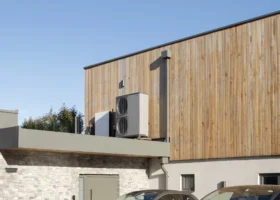
Service penetrations need to be planned carefully. Vents, extractor ducts and surface cables should be set out so they pass cleanly through the insulation and cavity, emerging at a precise point in the cladding.
The cavity then needs to be sealed around each penetration, with perforated ventilation closures integrated above and below where required. This helps maintain continuous airflow, weather-tightness and insulation performance, while preventing pests from entering.
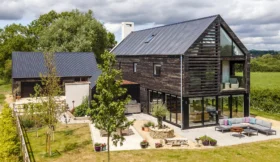
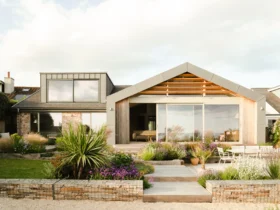
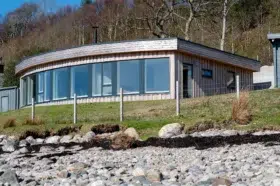
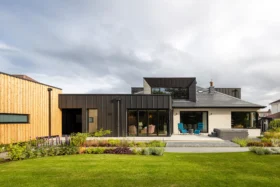
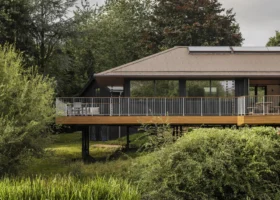
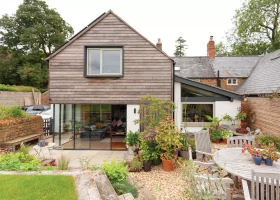
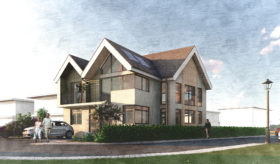
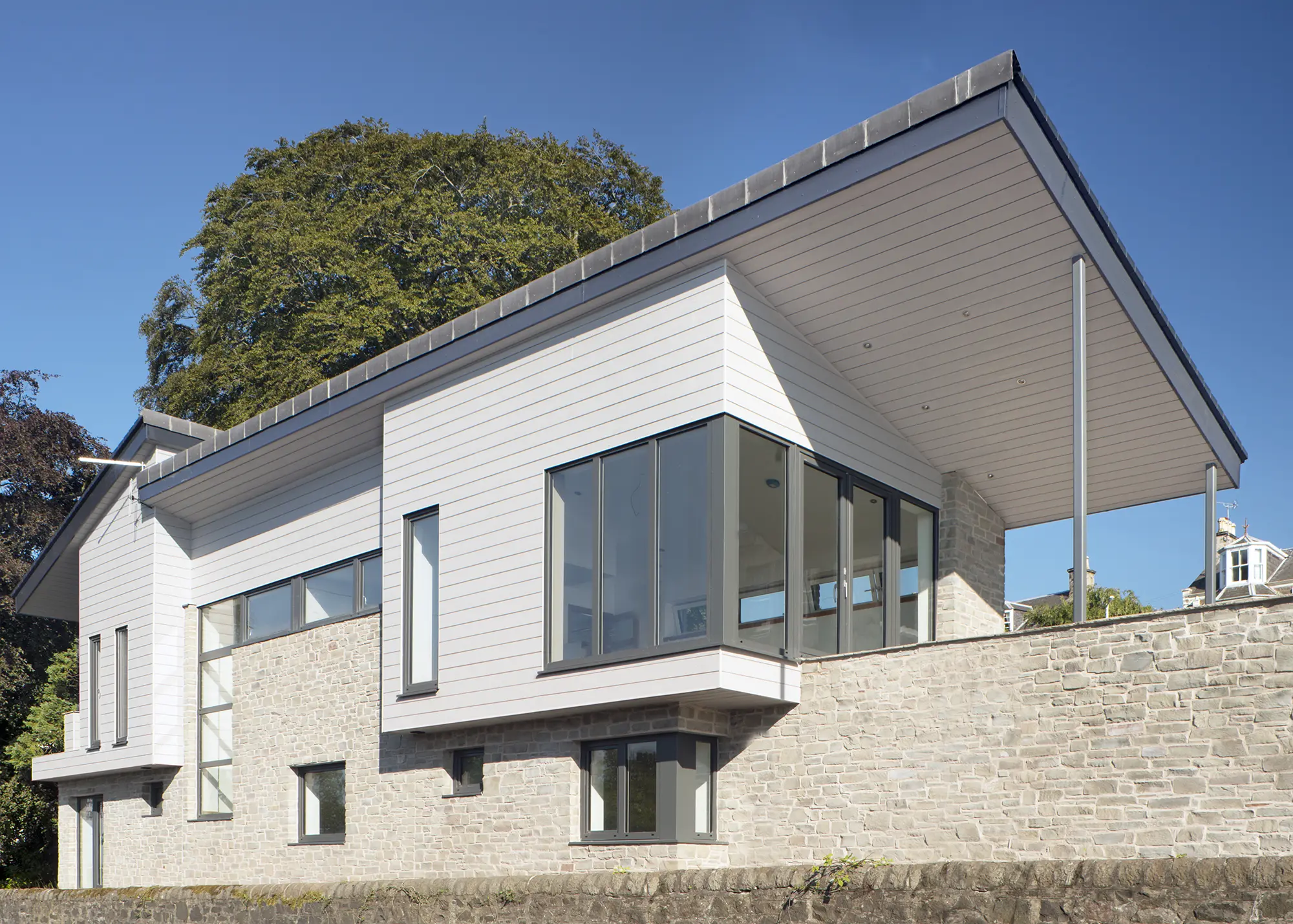
Cedral Click in White C01 was chosen for this contemporary coastal self build, providing a low-maintenance, textural finish with a subtle shadow gap from the tongue-and-groove profile
Junctions & edges
A good cladding install needs to integrate well with the rest of the building. For best results, plan how it will work around doors and windows in advance – leaving this decision until you’re on site can lead to compromises. Pay particular attention, too, to junctions with pitched gables, flat roof soffits and other interfaces.
Combining materials
There is a wide choice of materials to use in combination, but some go better together than others. Fibre cement cladding has grown in popularity globally, partnering effectively with brick, natural stone, tiles, stucco and even metal. The boards offer a timber-like appearance, while providing great longevity and low maintenance.
Contemporary houses are particularly suitable for combining materials on the exterior. A typical case is the addition of an extension or annexe with cladding that will deliberately create a contrast with the main building. Fibre cement boards can also be used selectively as feature cladding, for instance on gable ends, helping to improve weather protection while refreshing the facade.
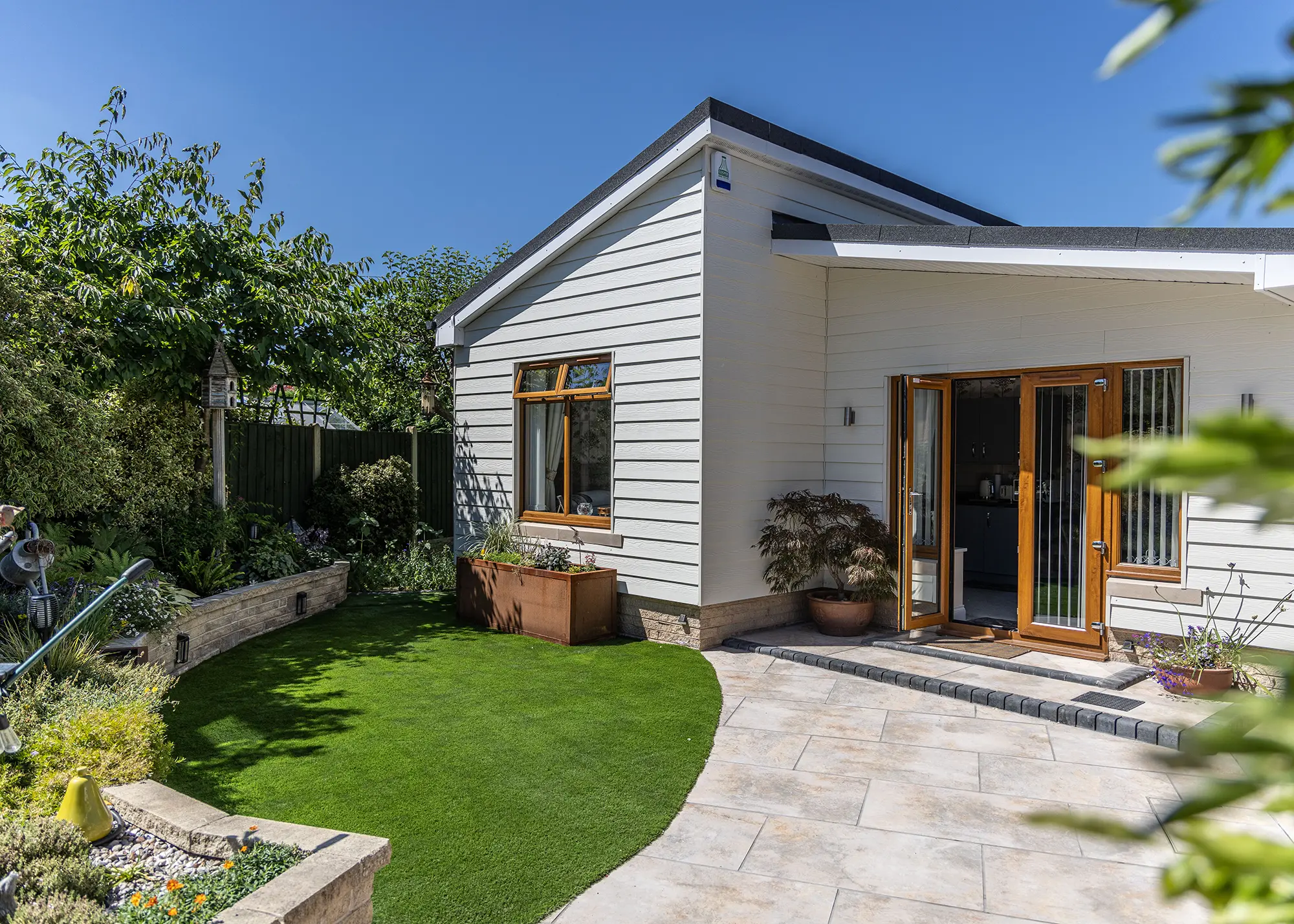
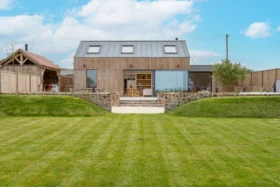
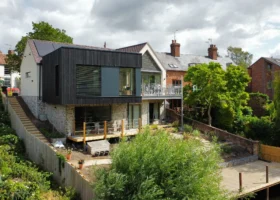
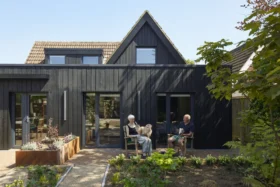
Built as a self-contained annexe for elderly parents, this new build in Worksop uses horizontal Cedral cladding in Chalk White C07
Horizontal vs vertical
Think about the overall external appearance you want for your home. What combination of orientation, joint pattern, colour and texture will suit the building? How will the finish read from a distance, up close and alongside neighbouring homes and the wider landscape?
When dealing with more traditional elevations, horizontal weatherboarding can create the familiar clapboard effect, with overlapping boards adding shadow and texture. New England-style shiplap is a popular variation, using long horizontal planks to create a coastal, characterful finish. Another is Scandi-style slatted cladding, which works particularly well as accents or for half walls. Vertical cladding is also popular on domestic projects, and can provide a sleek, contemporary look when paired with a tongue-and-groove profile.
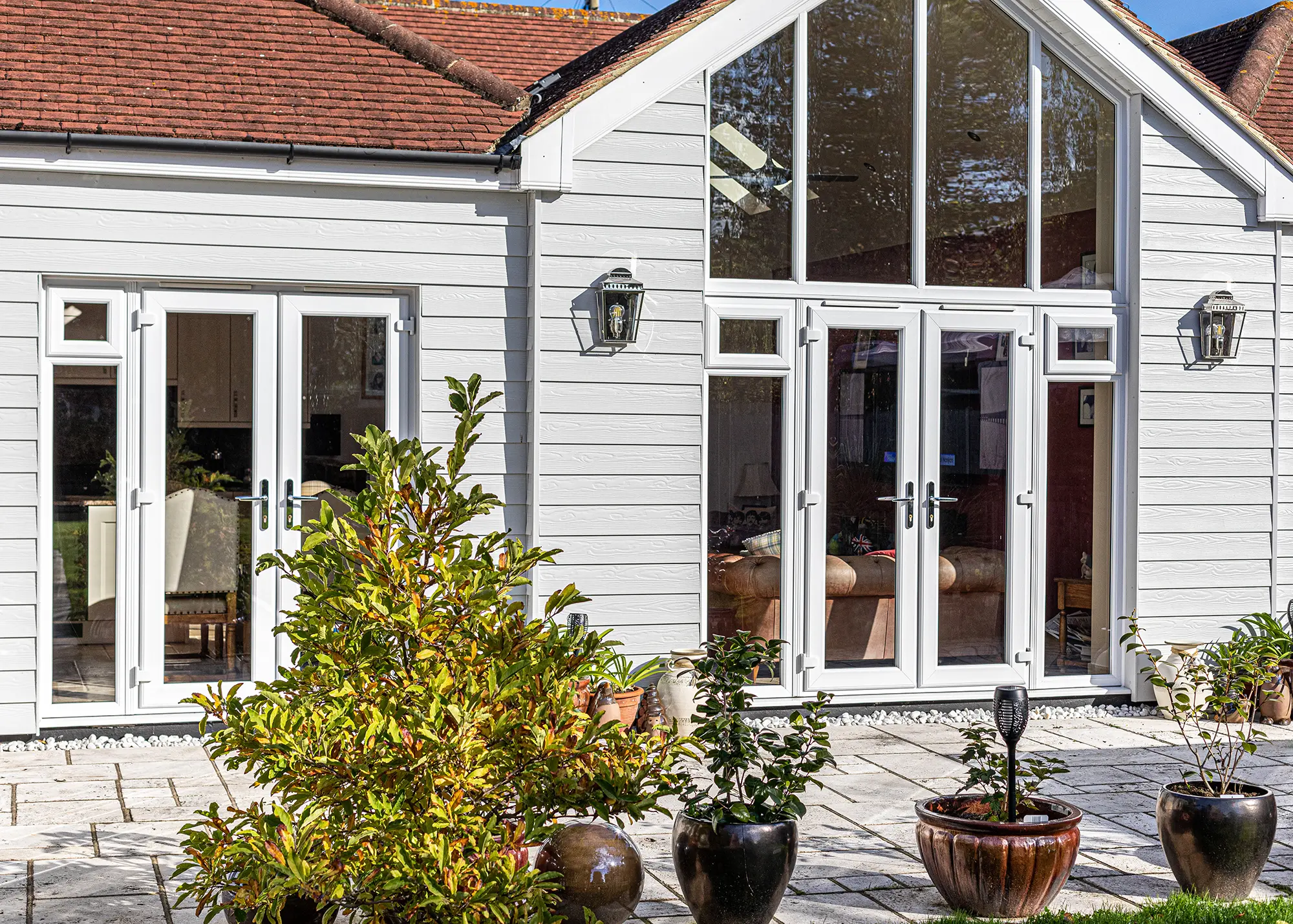
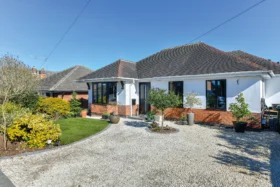
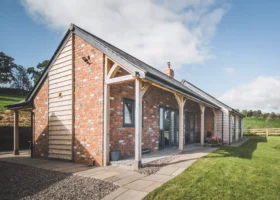
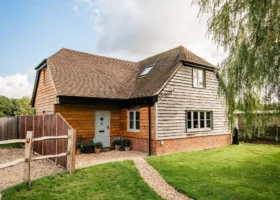
Tired of regular repainting, the owners updated the exterior of this 1950s bungalow with Silver Grey C51 Cedral Lap, installed in a shiplap arrangement in just three weeks
Planning the decisions early
Costs and quality come down to more than simply the visible cladding. The key lies in preparing and installing the complete system. Work out details such as budget, planning requirements, material quantities, fixings and installation while the project is still at design stage. Thorough preparation will help support long-term performance and a cleaner finish on site.
| Cedral, part of Etex, is a leading brand of fibre cement cladding and roofing materials. Its products are designed to help create durable, low-maintenance exteriors for self build, renovation and home improvement projects. Call 01283 501555 or visit Cedral’s website for more information. |
Cedral
You may be interested in